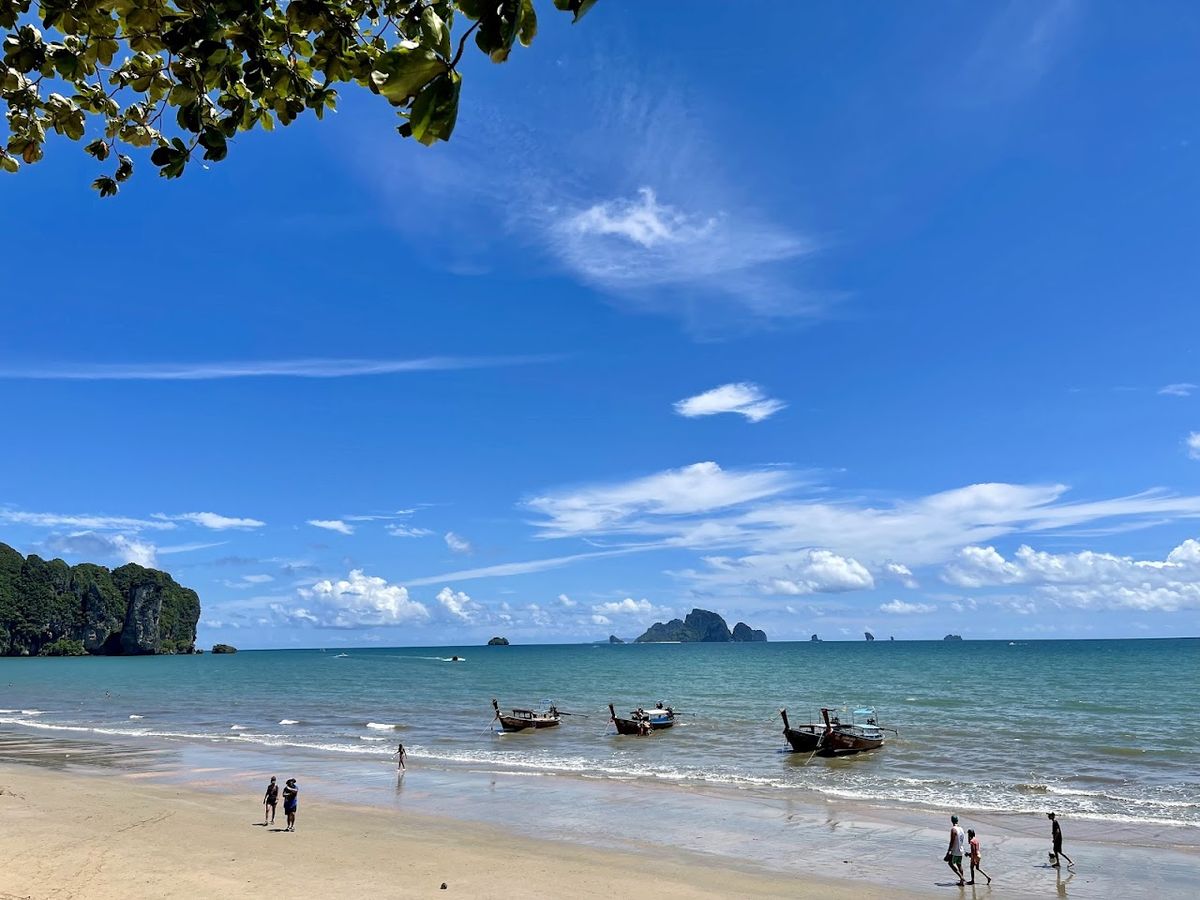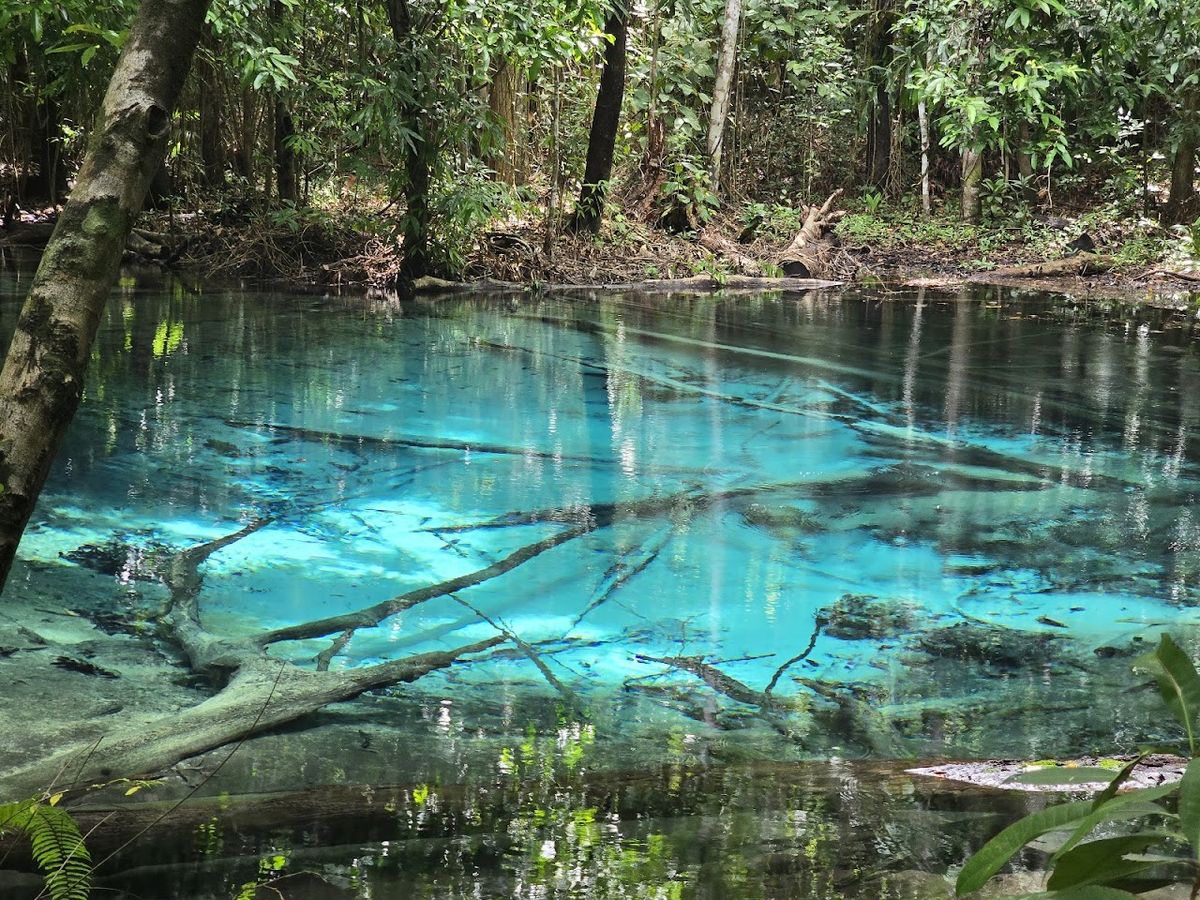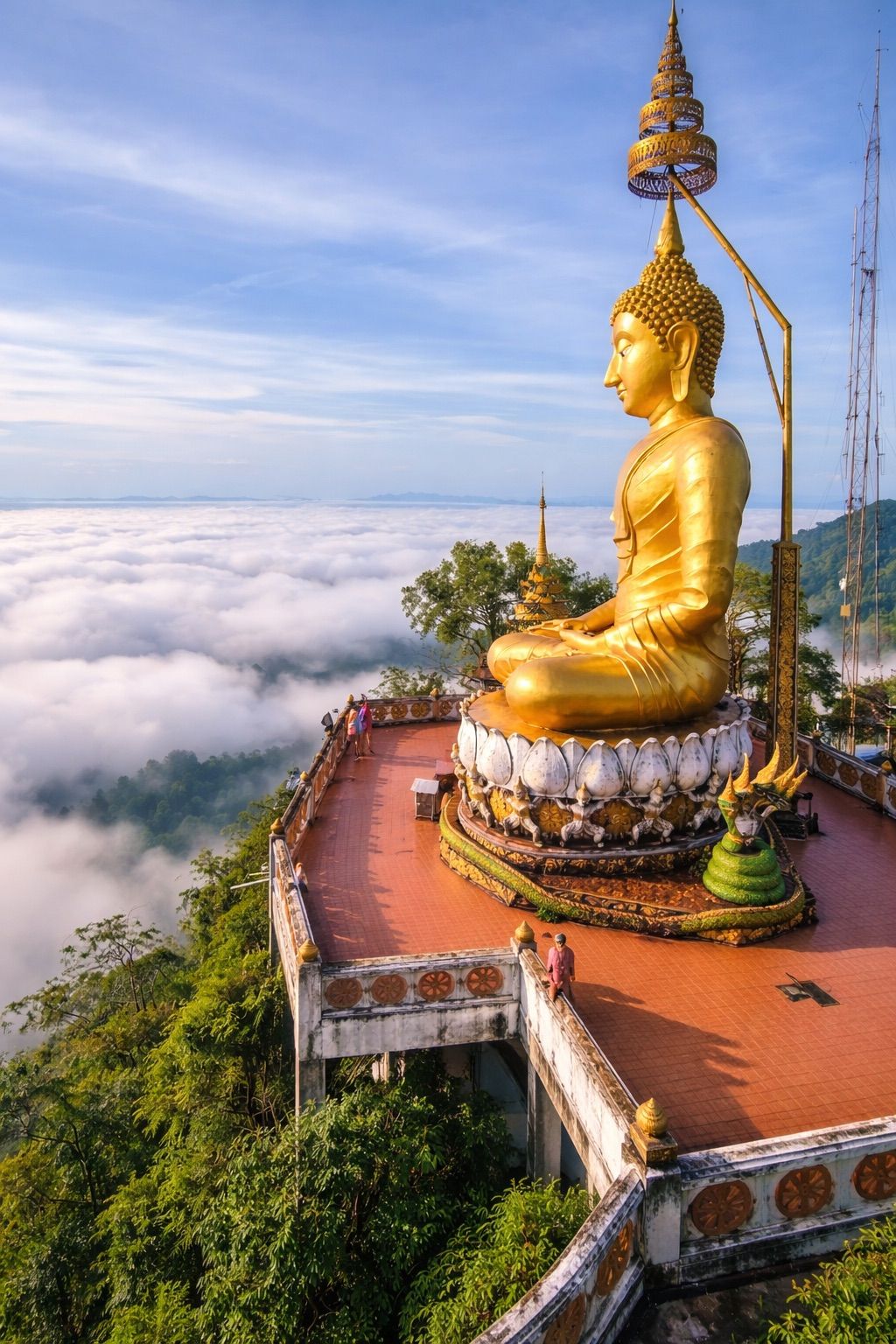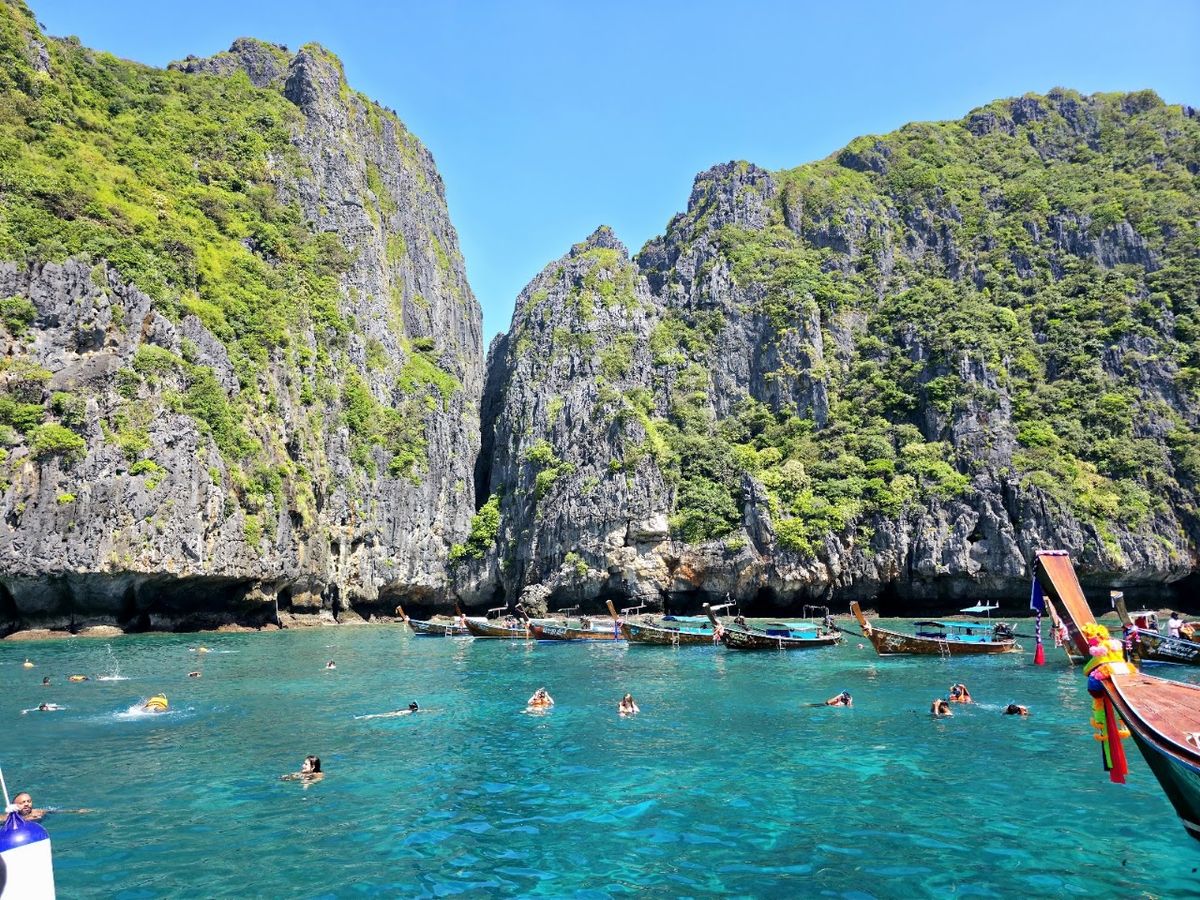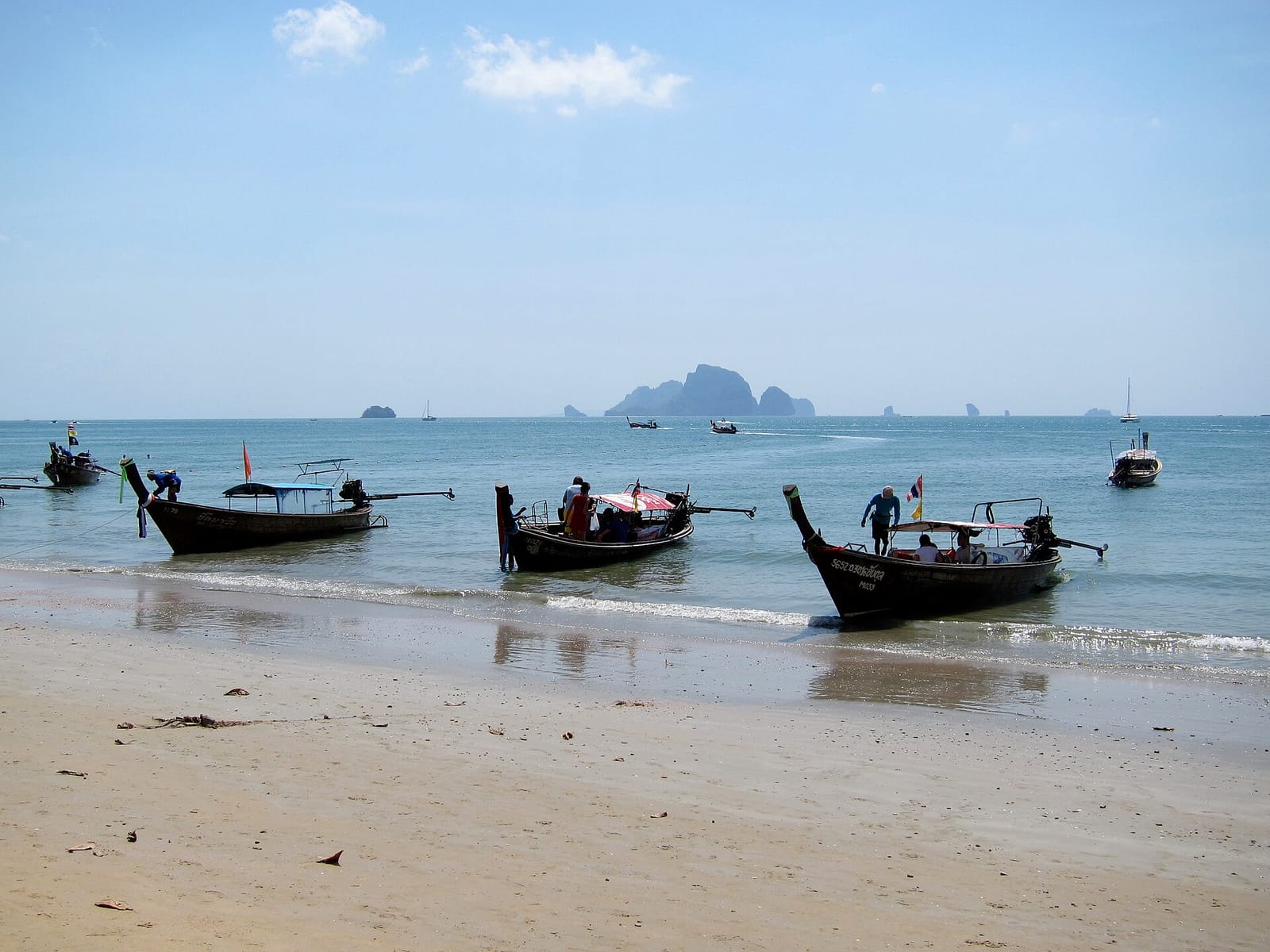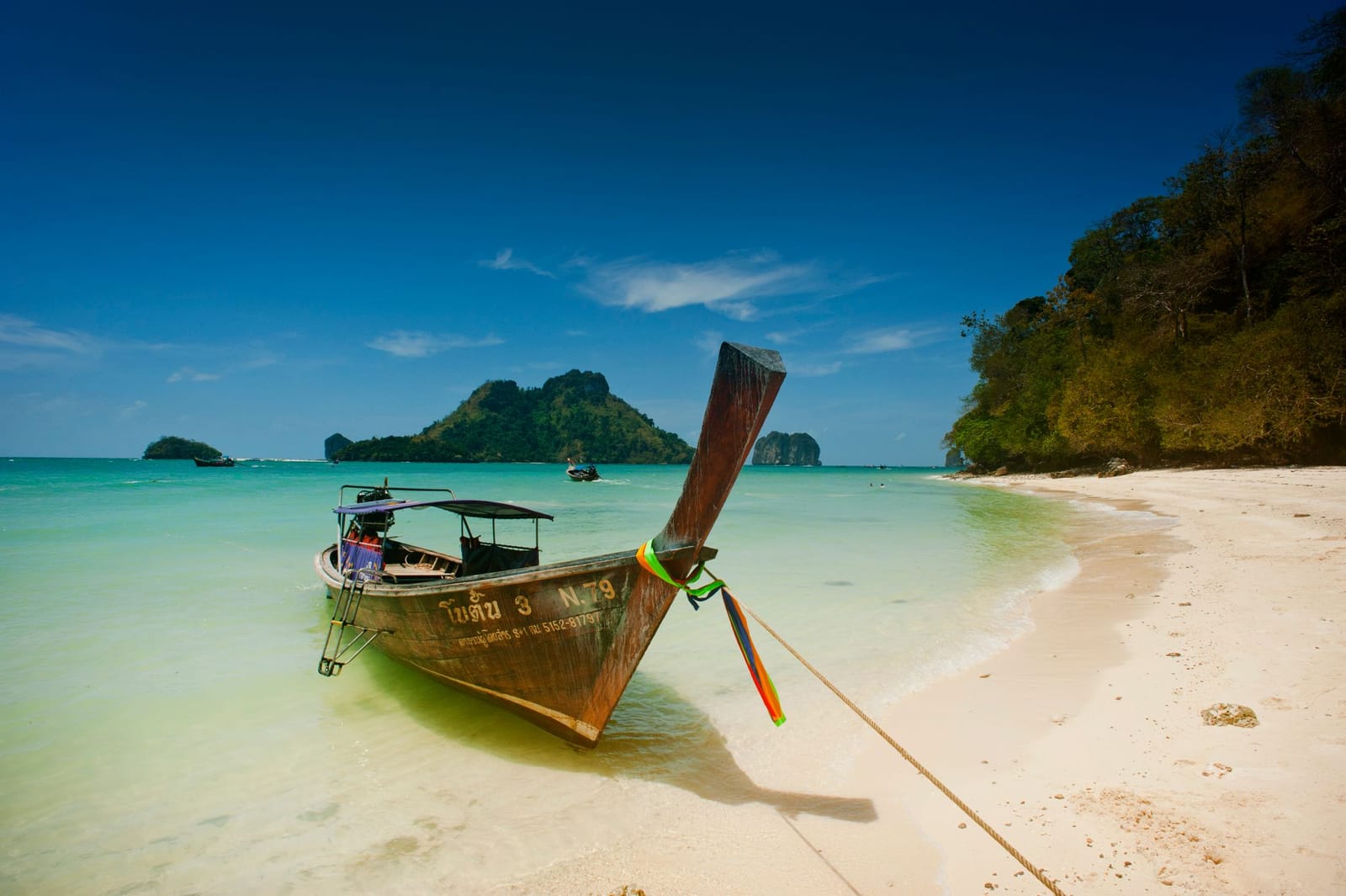
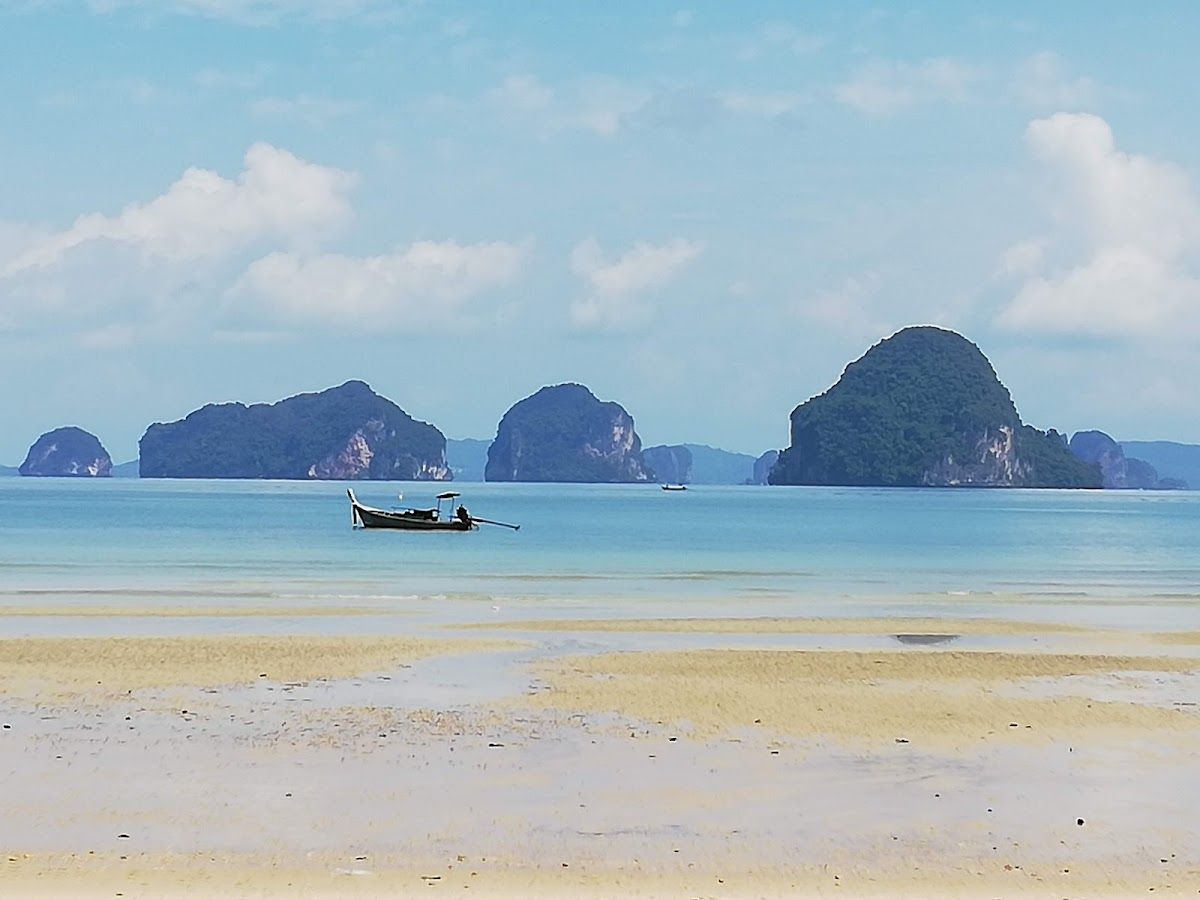
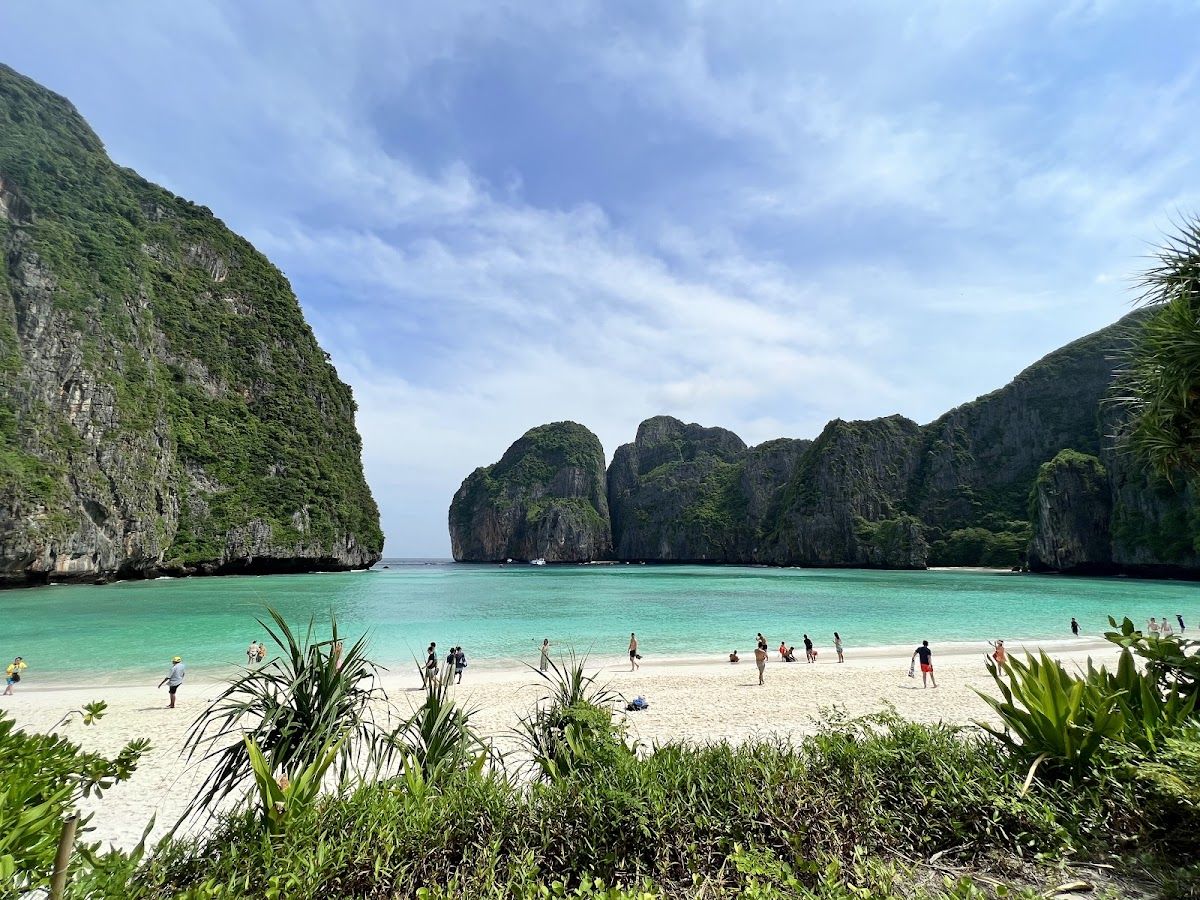

The beaches people photograph in Krabi and the beaches worth getting into the water at are not the same list. Ao Nang town beach is where the boats sit. The swims are a short longtail away, or north along the mainland at Klong Muang.
Quick facts
Checked 23 October 2026.
- Best swim: Phra Nang, boat-only, on the tip of Railay. Clear water under the cliff.
- Best swim you can stay beside: Railay West. The Railay Beach guide checked the shared Ao Nang longtail on 12 October 2026: ฿100 one way, ฿200 return, about 10–15 minutes, shared boats about 8am to 6pm from the Ao Nang Longtail Boat Service Club.
- Calm mainland swim: Klong Muang, north of Ao Nang. Taxi or scooter, not a songthaew all the way.
- Skip for swimming: Railay East (mangrove, muddy at low tide) and Ao Nang town beach (a working harbour).
- Park fee: the Department of National Parks table dated 2 June 2023 charges a foreign adult ฿200 at Hat Noppharat Thara–Mu Ko Phi Phi, and ฿400 only for Phi Phi Don, Phi Phi Le and Bamboo Island. Details below.
- When the sea is calm: November to March. December to February is the busiest and dearest. See best time to visit Krabi.
The wider ranking, including sunset beaches that are not swims, is in best beaches in Krabi.
Phra Nang
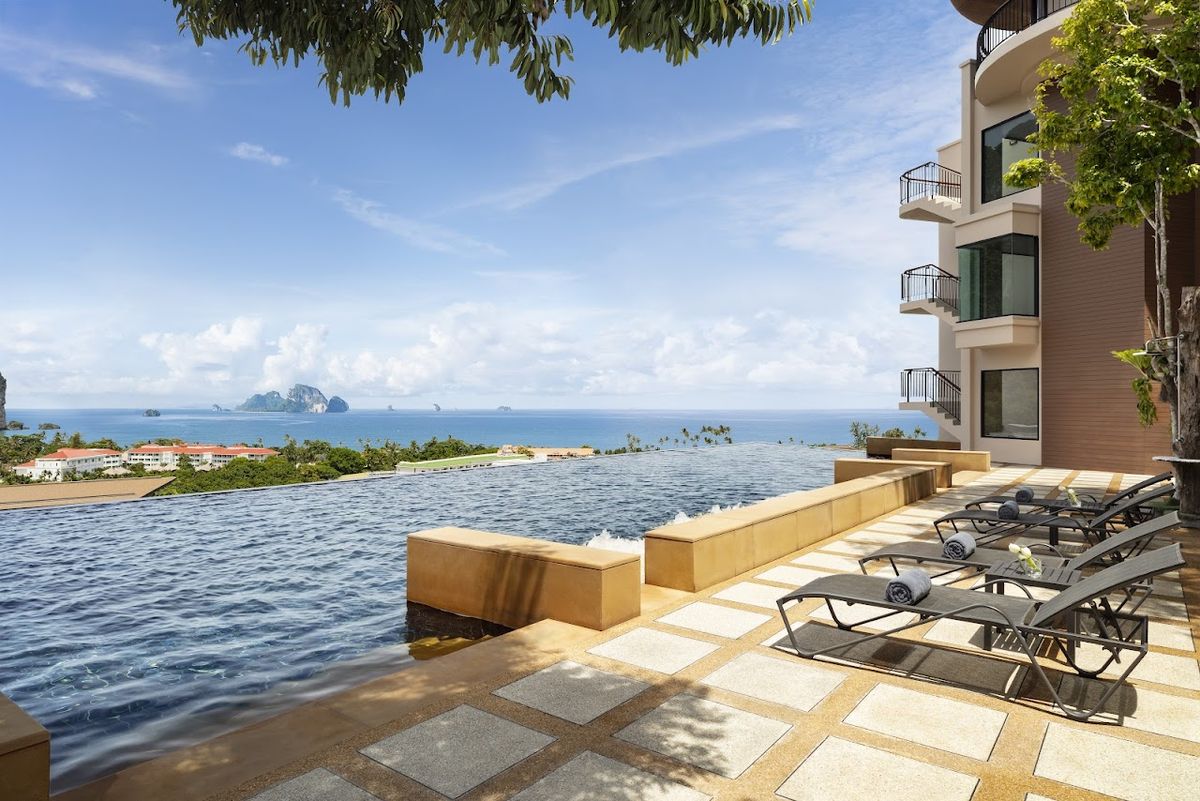
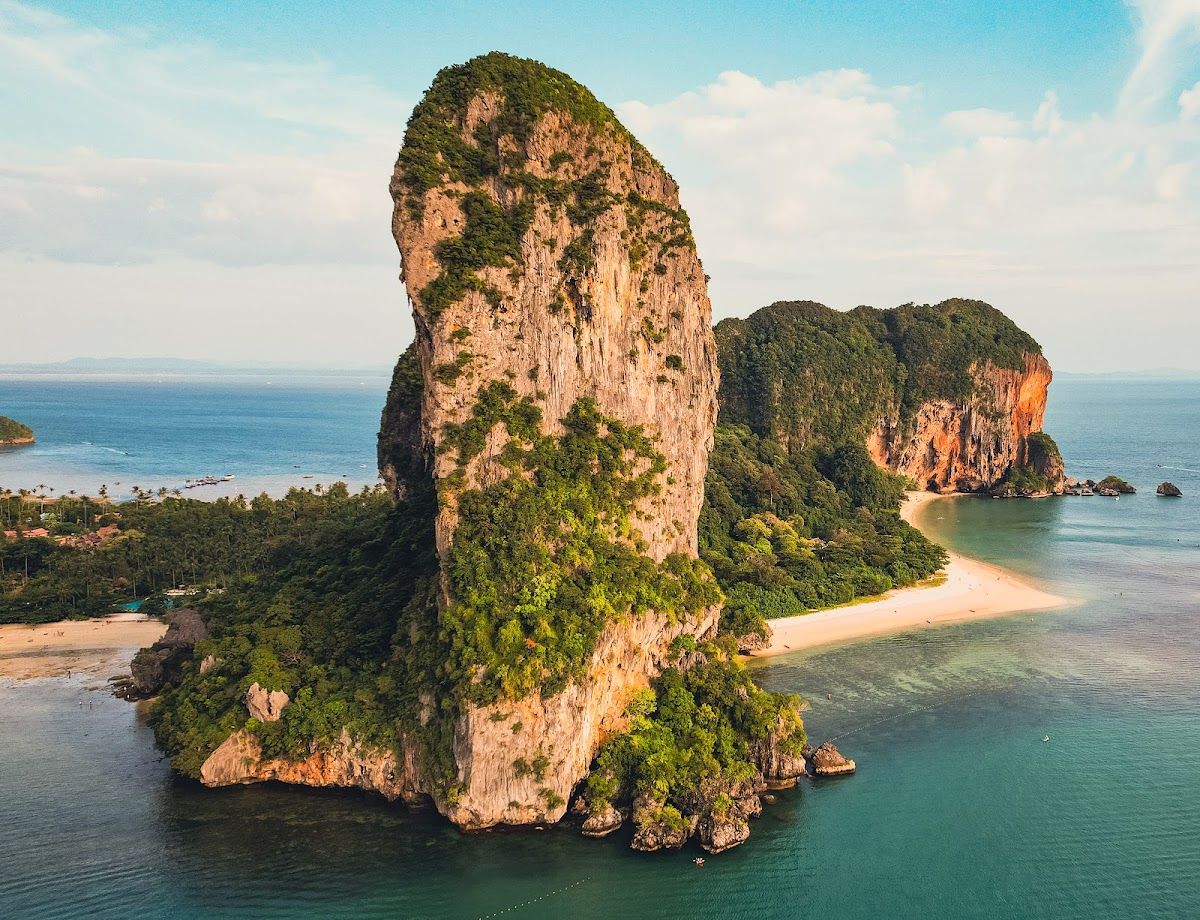
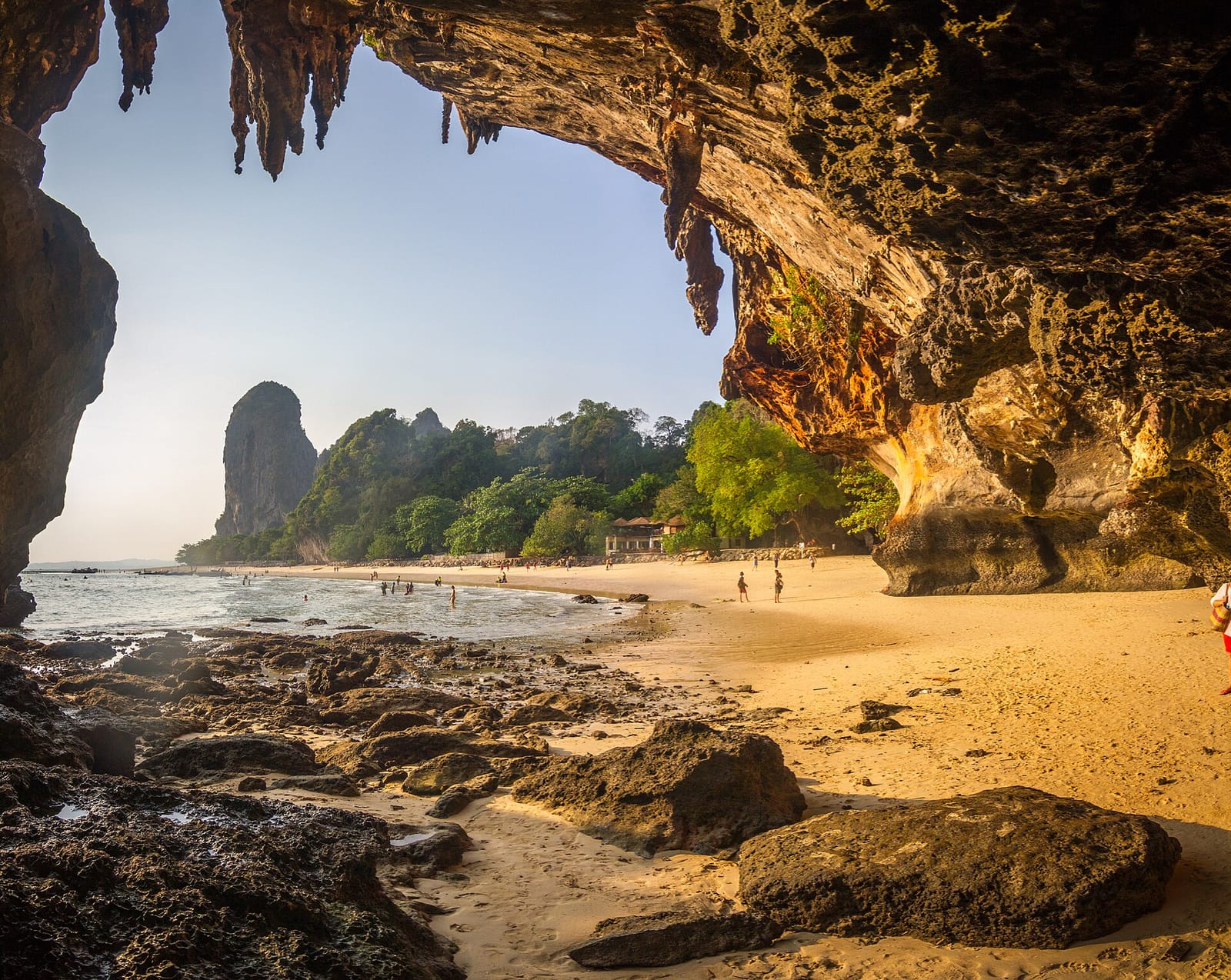
This is the swim. Phra Nang sits on the southern tip of the Railay peninsula, with clear water in front of the cliff and the Princess Cave shrine at one end. There is no road. You take the Ao Nang longtail, then walk across from Railay West or Railay East.
Bring water. The only sellers on the sand are boat vendors. The cave itself has no ticket. You pay the boat, not a gate. The walk and the cave are covered in the Railay Beach guide.
Railay West
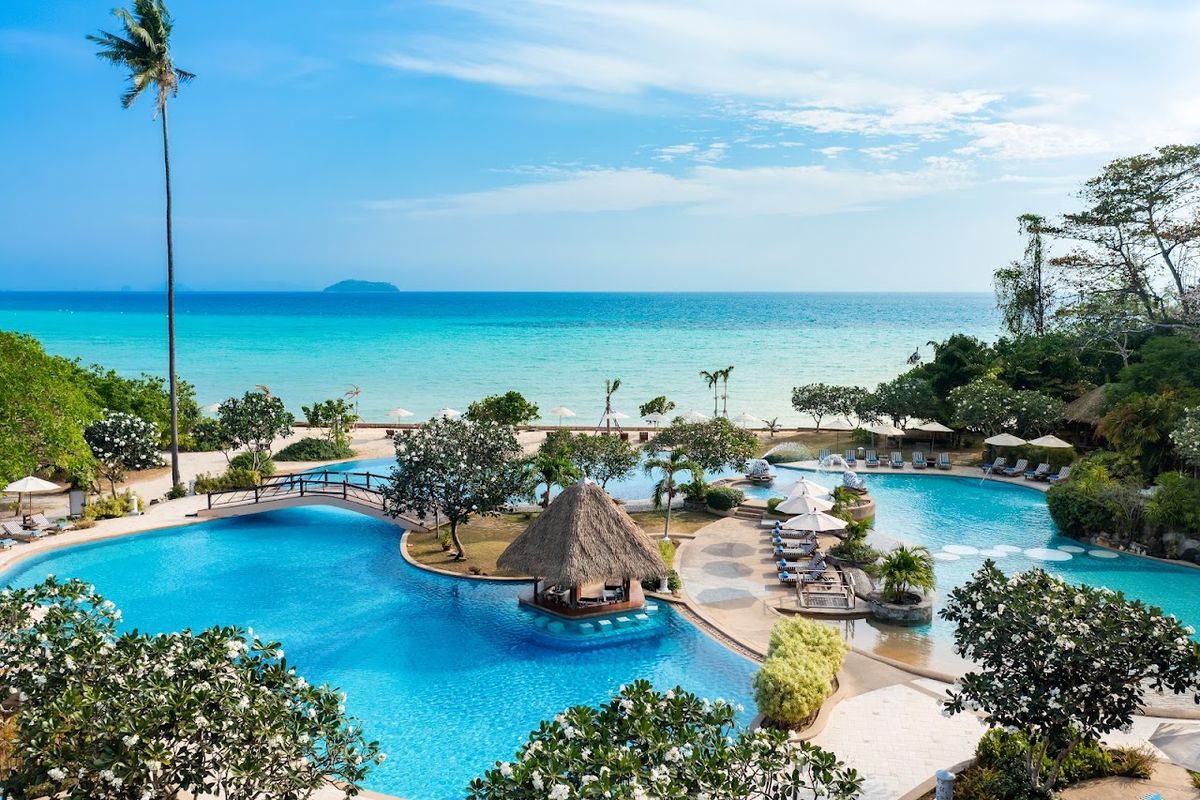
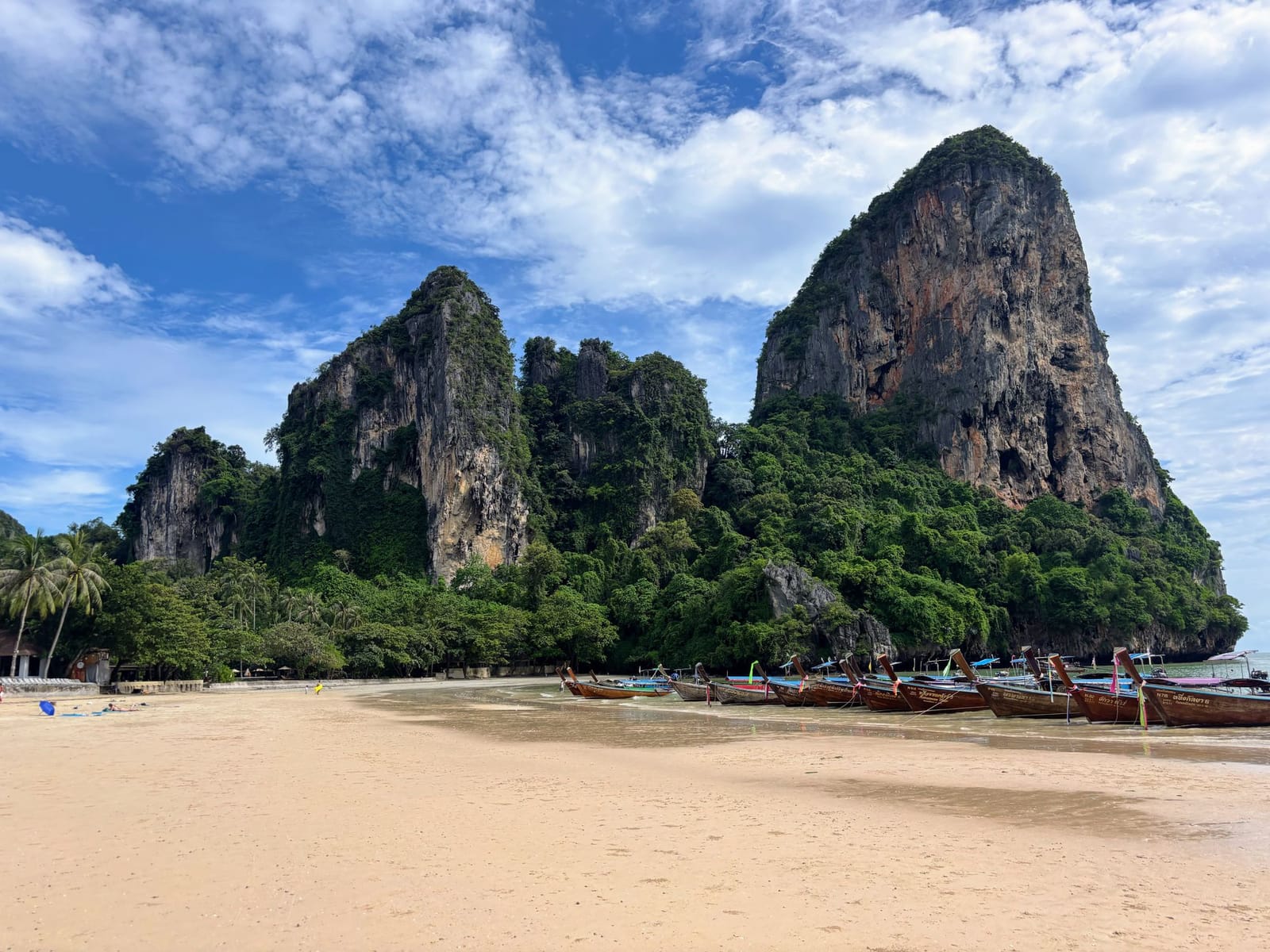
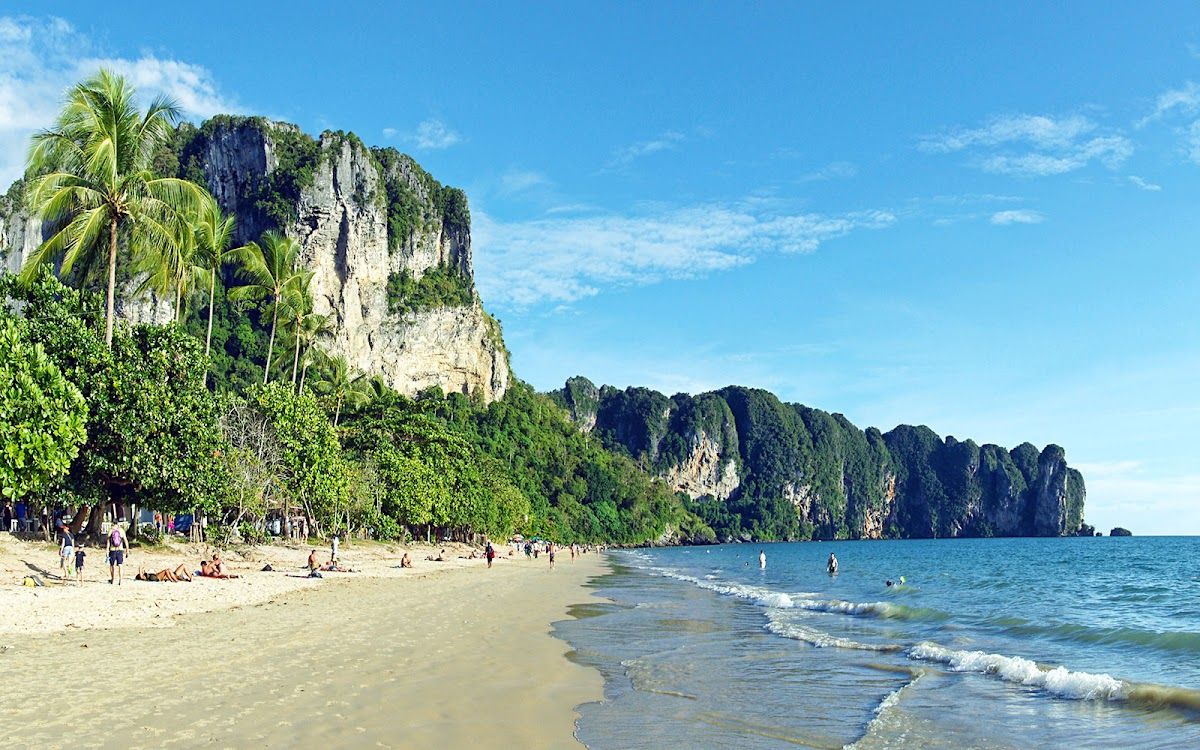
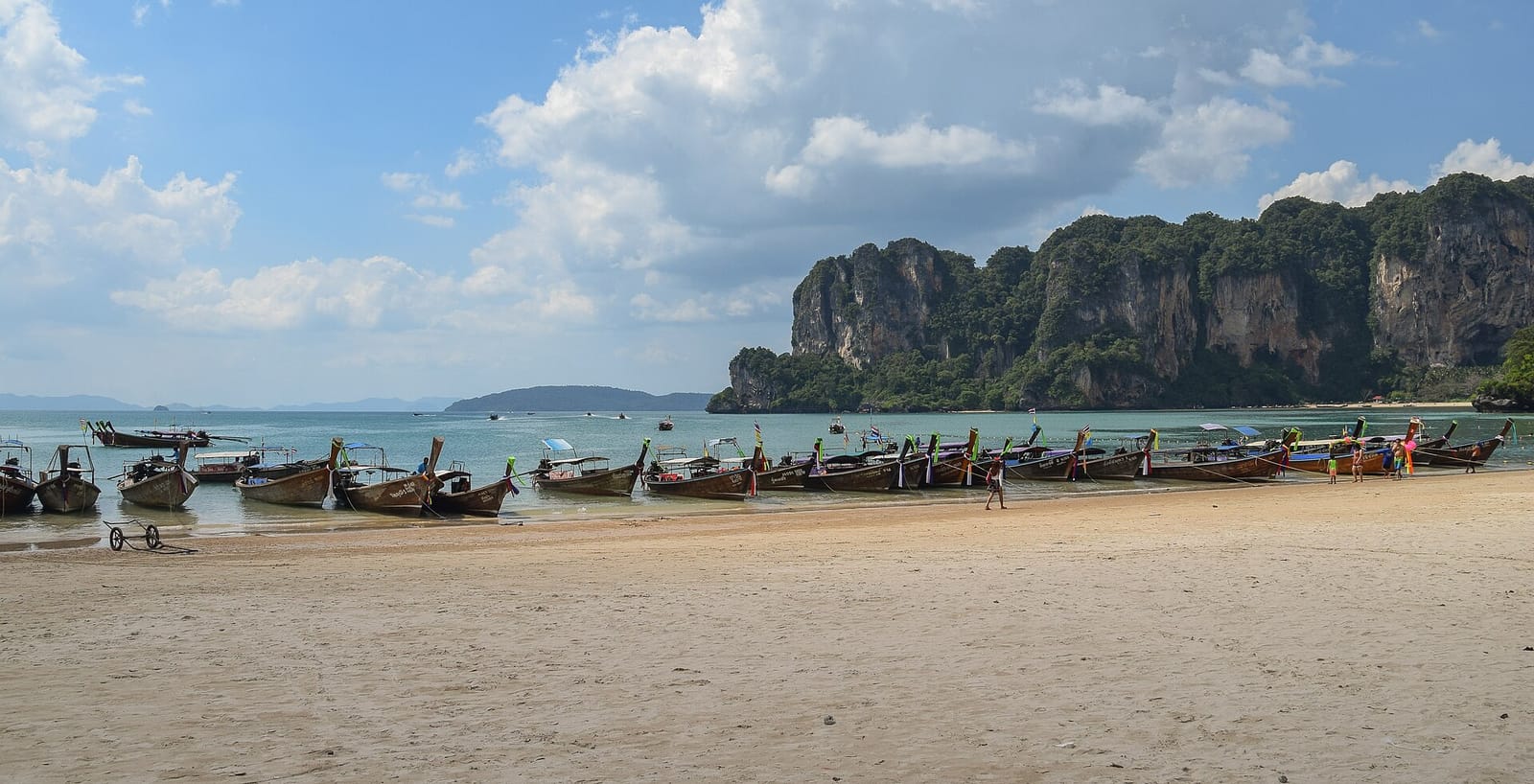
Railay West is the wide sunset beach where most of the longtails land. The water is clear enough to swim, and you can stay on the sand, which Phra Nang does not allow. It is busier than Phra Nang once the day boats arrive, so the early boat is the quiet swim.
Low tide means you wade in from the boat, sometimes over rock. Wear sandals you can take off, and keep a bag high. Boats may land on Railay East instead, depending on the tide. That side is a flat walk from the west beach.
Klong Muang and Tubkaek
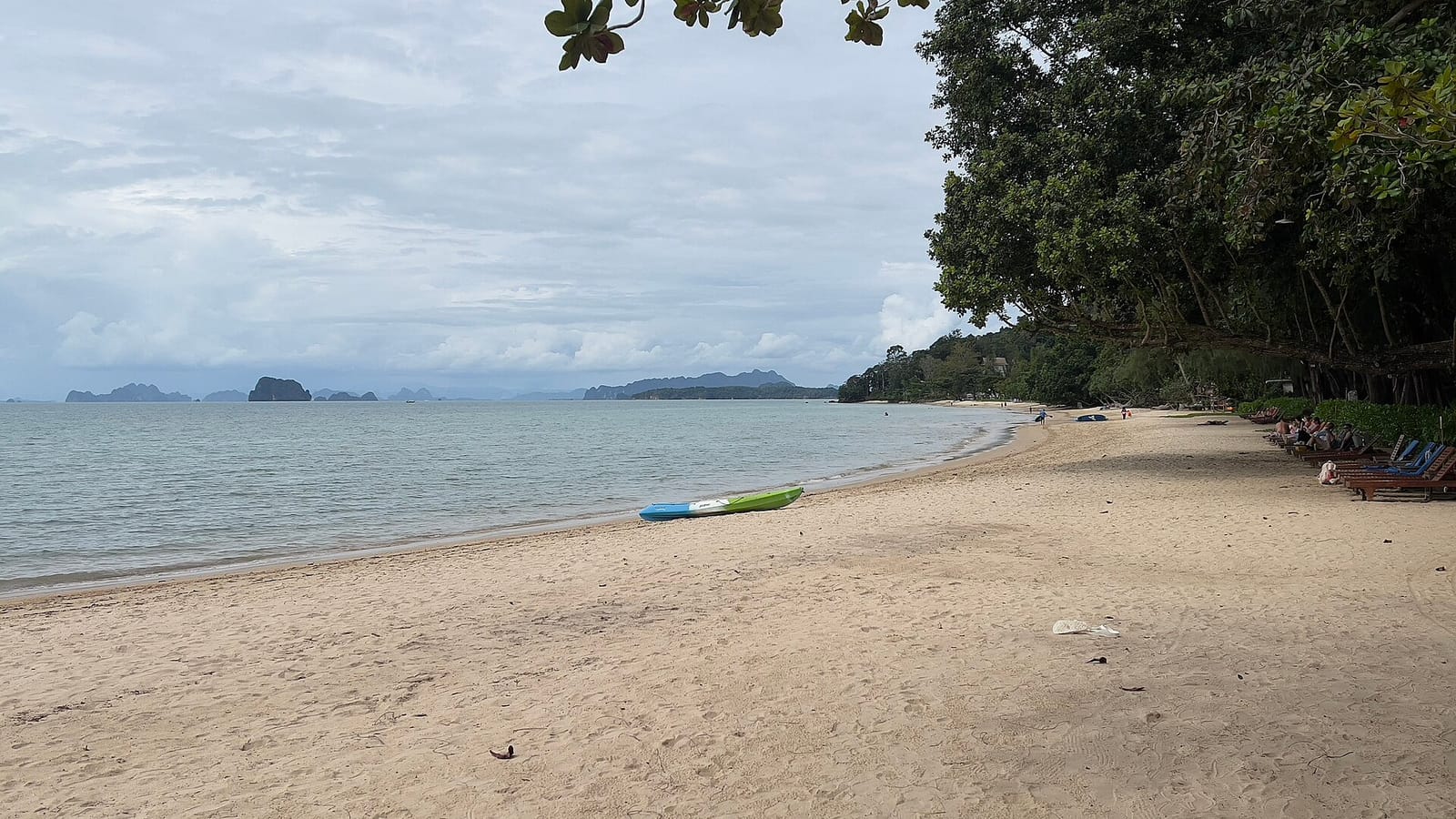
Klong Muang is the mainland beach to pick if you want a swim without a boat. It is flat, calmer than Ao Nang’s harbour, and backed by resorts rather than bars. Tubkaek, next door, looks out at the karsts and is a strong sunset, but low tide pulls the water a long way out and leaves flats you walk across. Neither has a direct songthaew from Ao Nang. Use a taxi or a scooter. The area page is Klong Muang.
Noppharat Thara
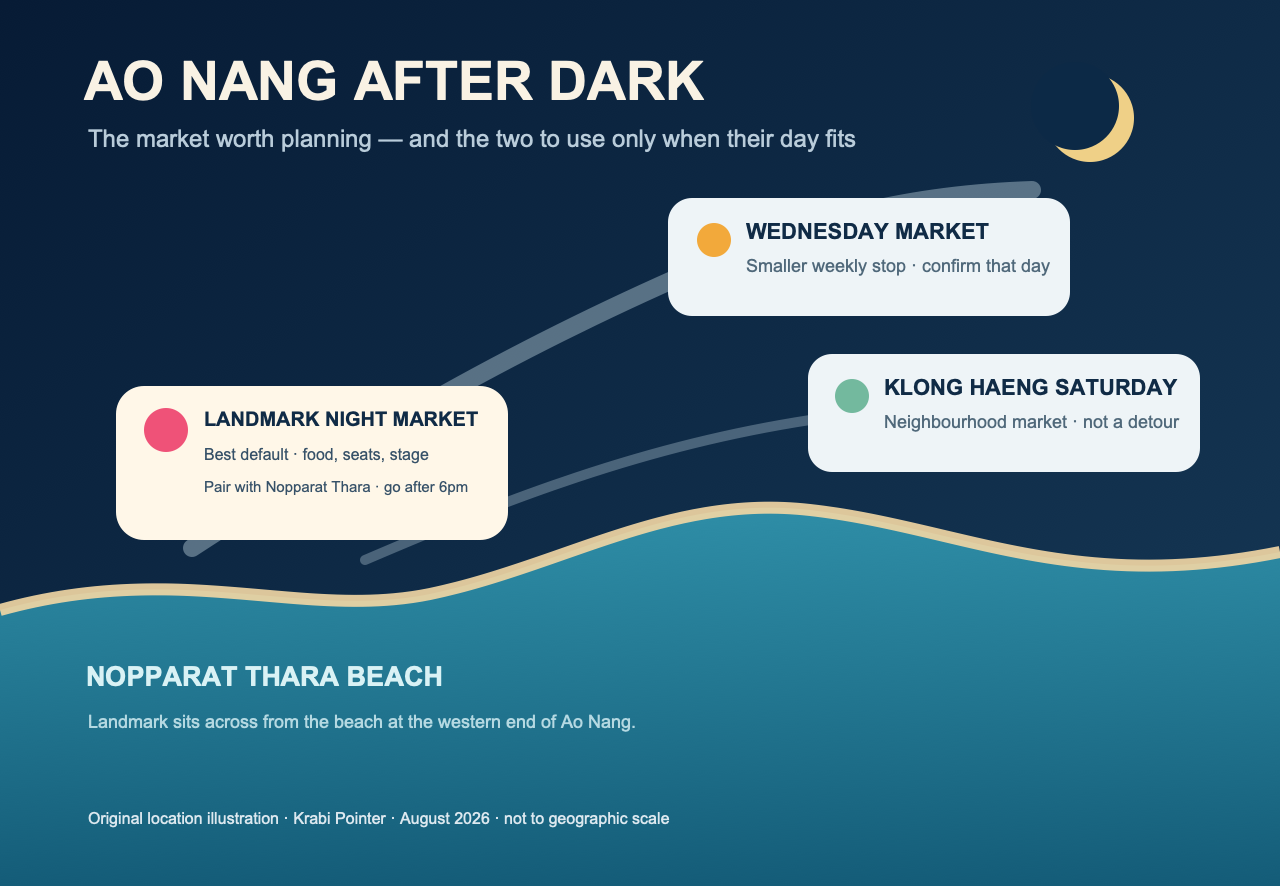
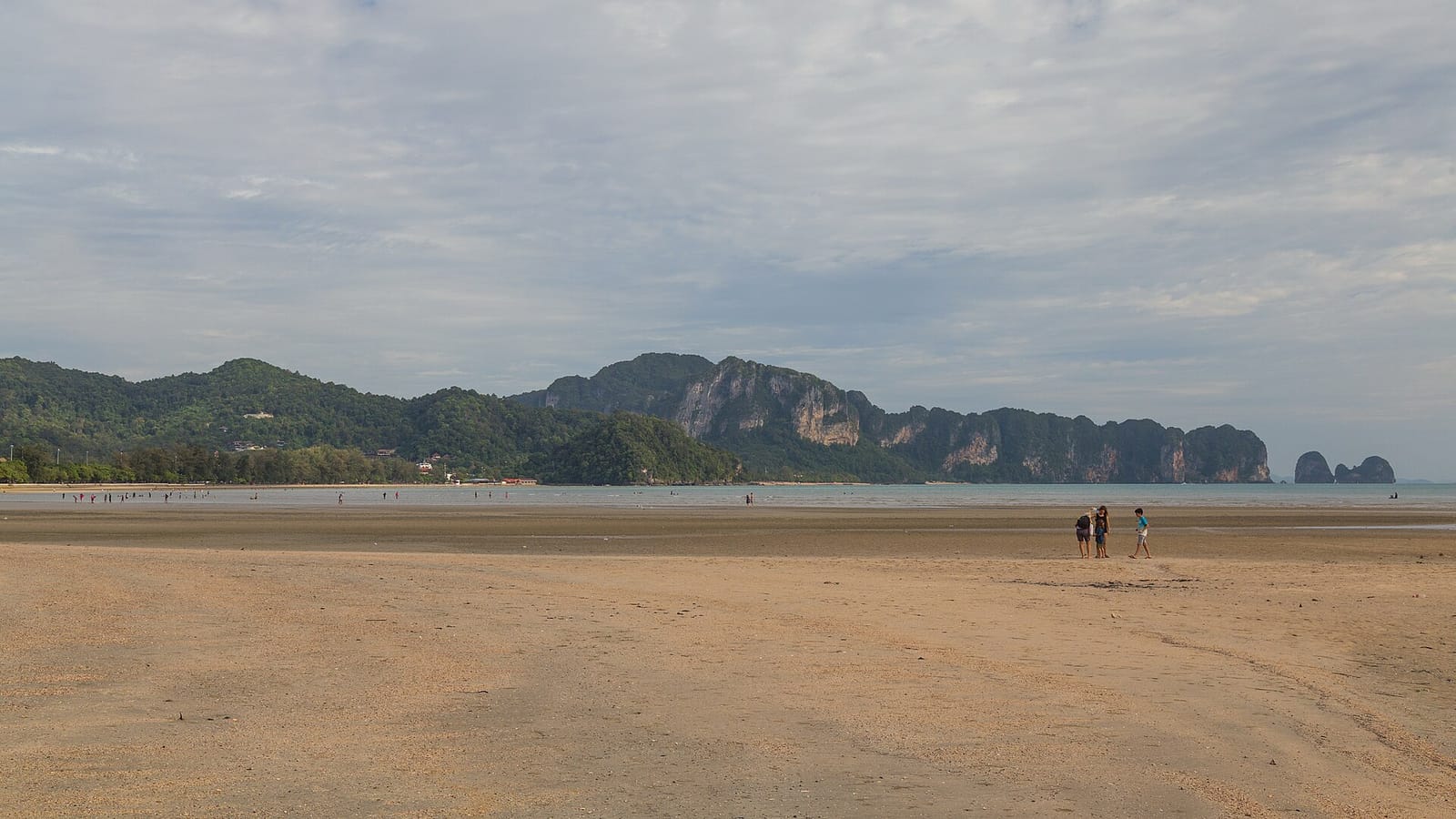
Noppharat Thara, just west of Ao Nang, is the national-park beach. It is long and quieter than the town strip. At low tide it is shallow and wide, which makes it a walk and a picnic more than a deep swim. Some island boats leave from this end. A songthaew or a walk from Ao Nang gets you there.
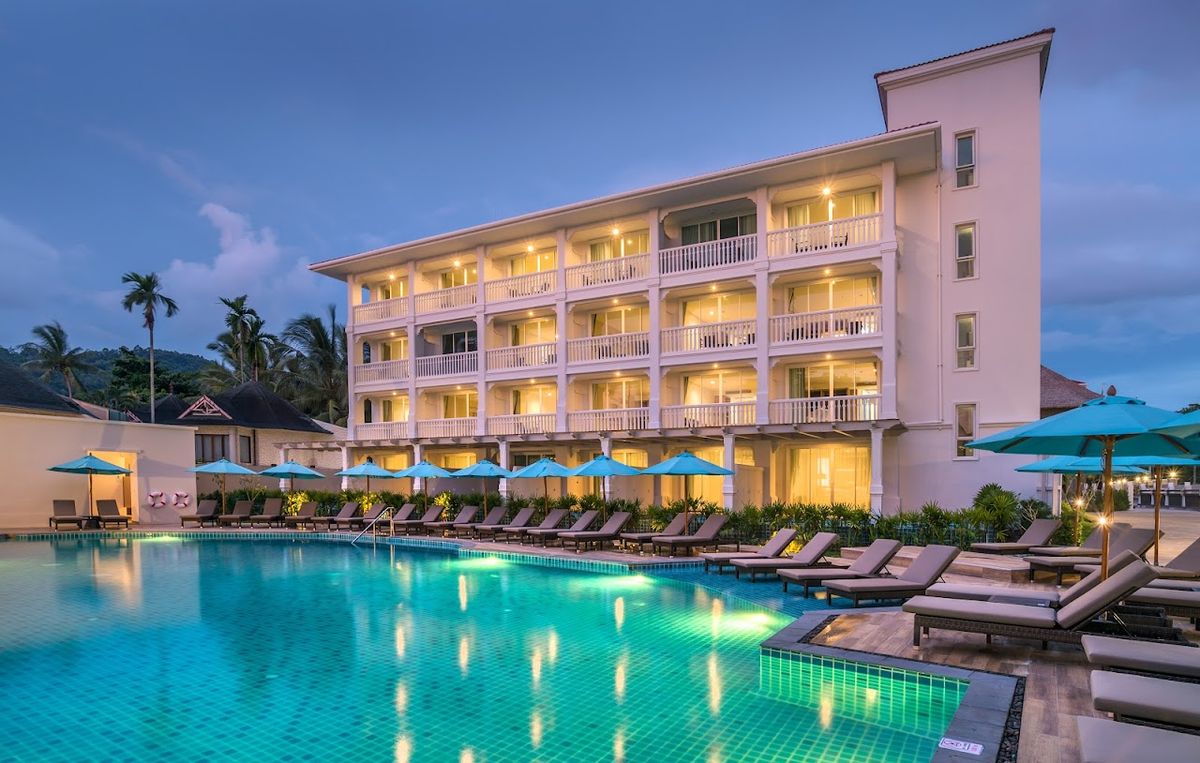
If you want a room on this side rather than on the Ao Nang promenade, The Capuchin Hotel is on Soi 8. Agoda’s place list puts Noppharat Thara at 270 metres and Ao Nang beach at 570 metres. It is a walk to the sand, not a beachfront hotel. December to February is when Ao Nang fills. A free-cancellation rate holds the price you see on the day you book.
Beaches that are not the swim
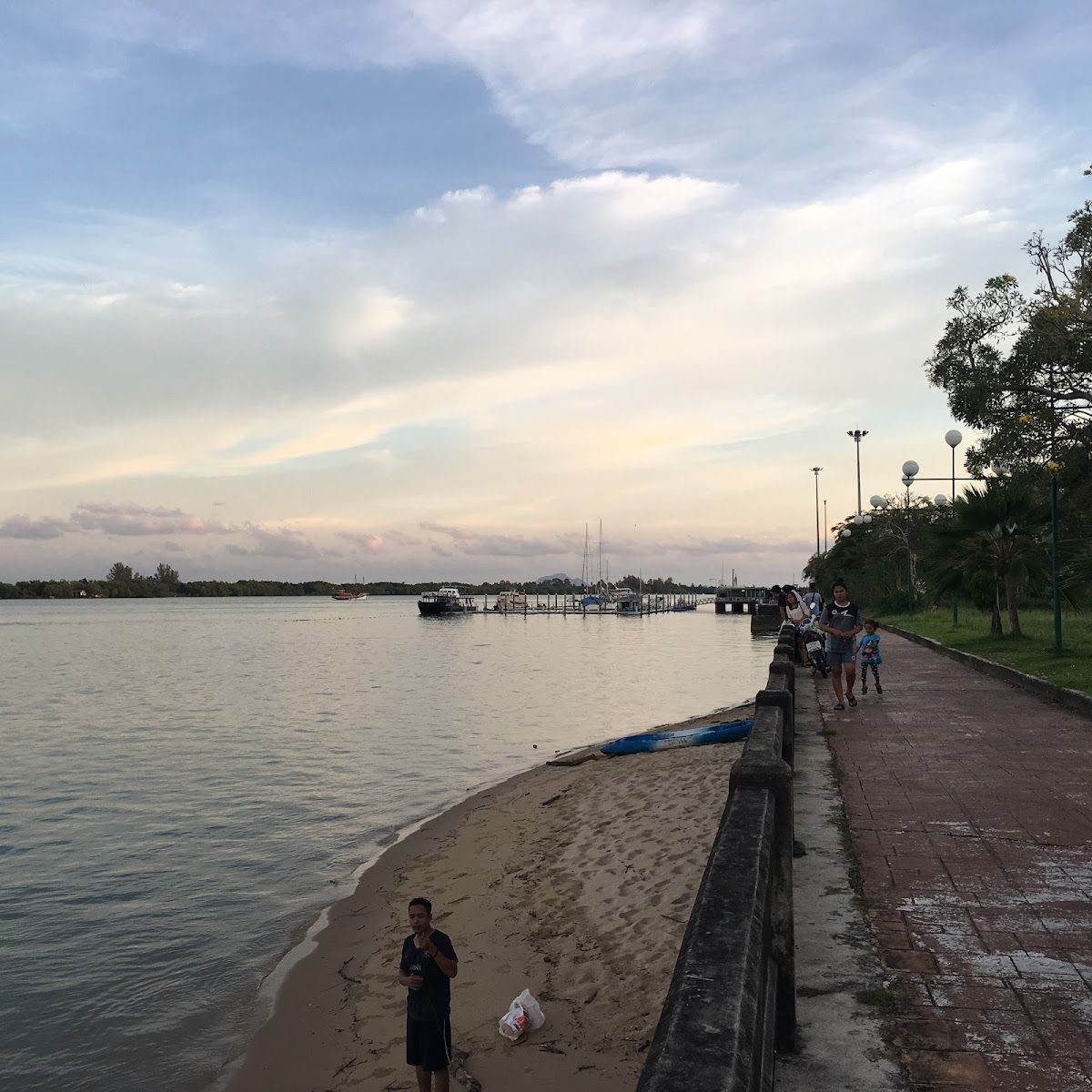
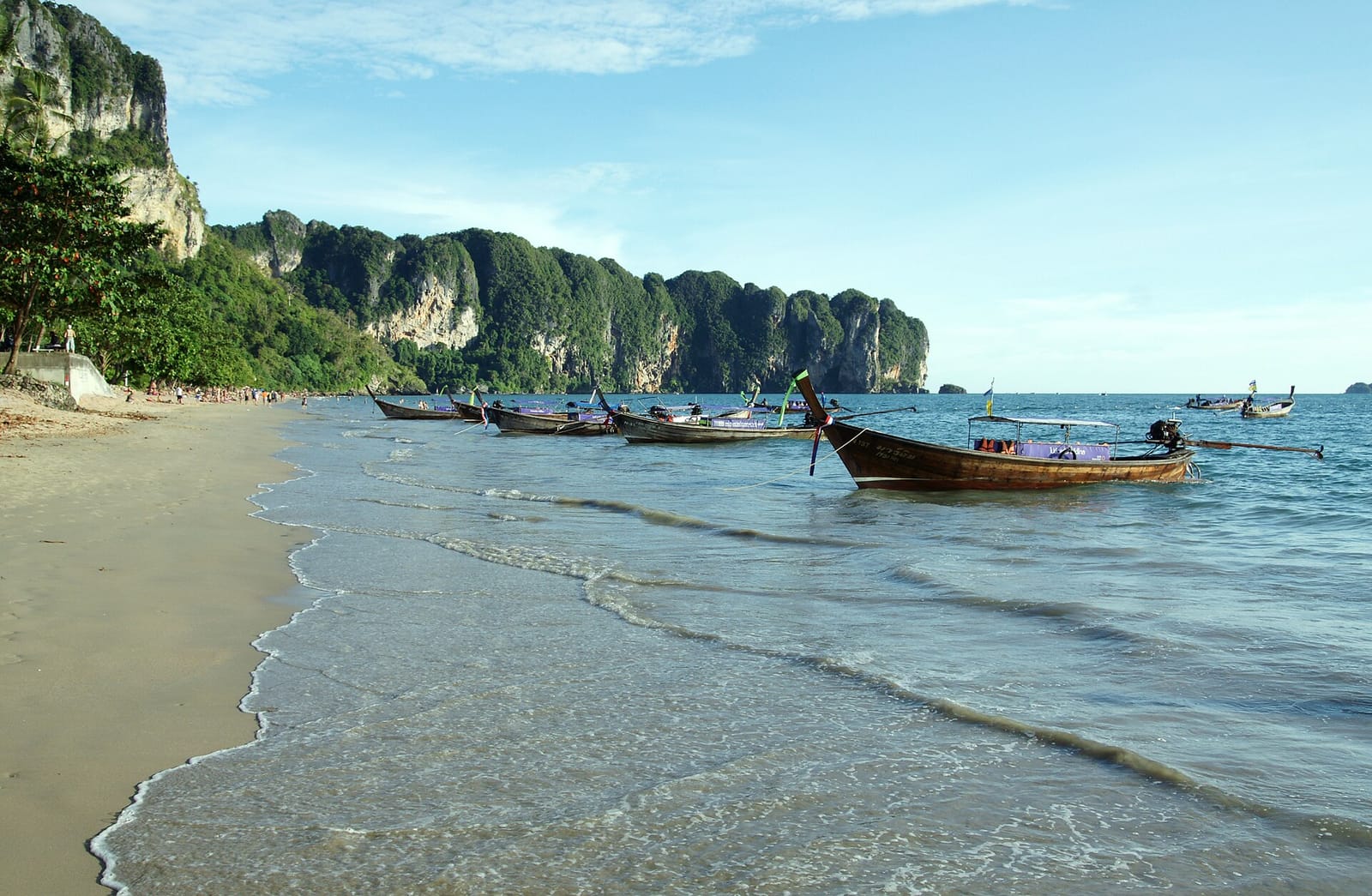
Ao Nang town beach is a working longtail harbour. The sunset promenade is the point of it. The water in front of the bars is ordinary, and the boats share it. Stay in Ao Nang for the pier, then boat out to swim. The town layout is in the Ao Nang area guide.
Railay East faces the mangroves. It goes muddy at low tide and is not a swimming beach. It is where the cheaper rooms are, a short walk from Railay West.
Tonsai, north of Railay West, is the climbers’ beach. Low tide pulls the water out, and the sand is the rough one on the peninsula. Go for the cliffs, not the swim. At low tide you can scramble over from Railay West. Otherwise it is its own longtail.
Island swims
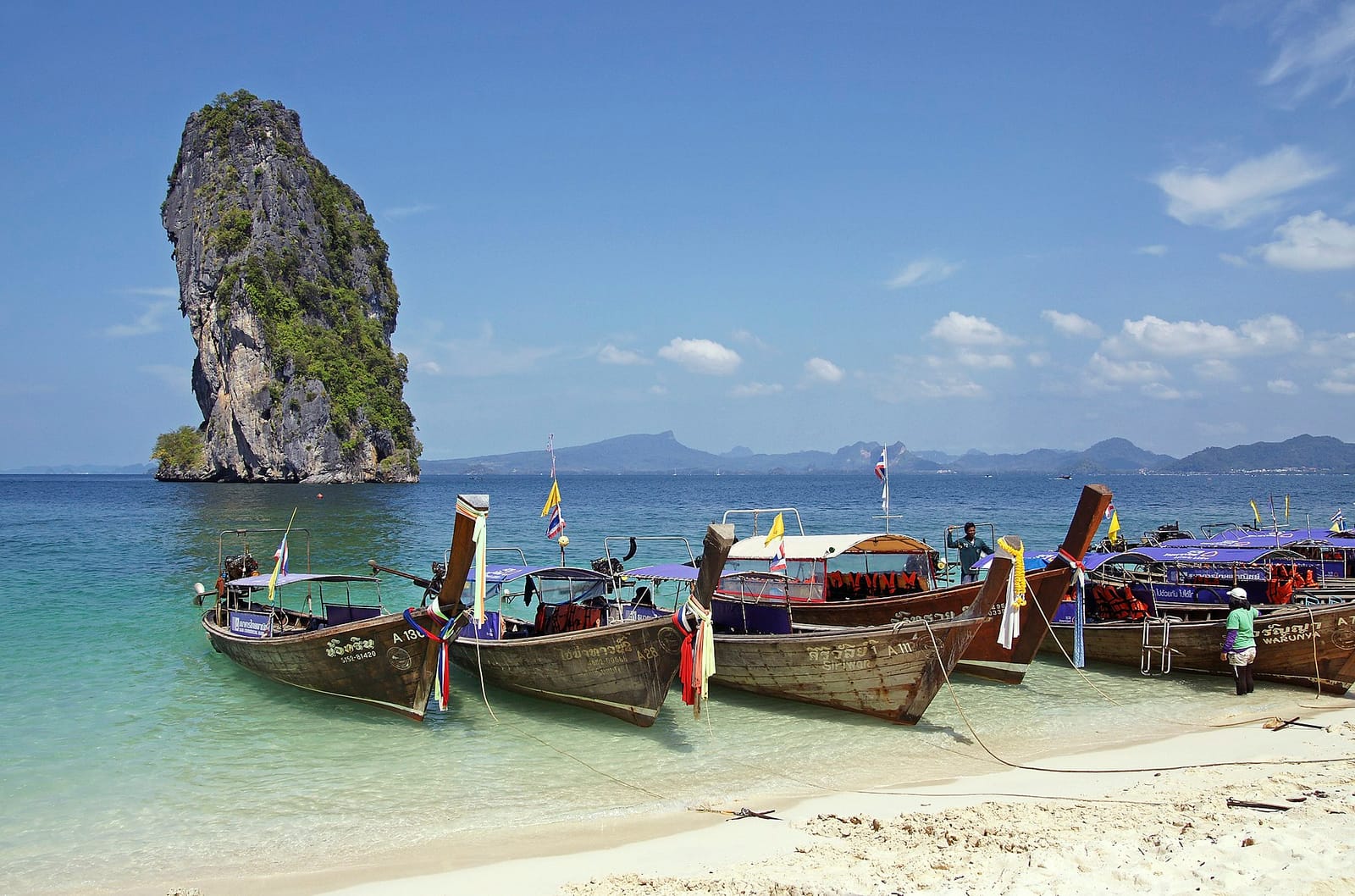
Koh Poda, on a Four Islands tour, is the usual swimming stop: a white arc and shallow clear water. Tup and the neighbouring islets join by a sandbar at low tide, so you walk between them ankle-deep. These are day beaches. You do not stay.
The fee is not one number for every island. The Department of National Parks entrance-fee table, data dated 2 June 2023, is still the file on the DNP data catalog. For Hat Noppharat Thara–Mu Ko Phi Phi it lists:
- Foreign adult ฿200, foreign child ฿100, for the park in general. Thai adult ฿40, Thai child ฿20.
- Foreign adult ฿400, foreign child ฿200, only for Phi Phi Don, Phi Phi Le and Bamboo Island (Ko Mai Phai). The table does not reprint a Thai rate on that sub-zone line.
Koh Poda is not in that ฿400 sub-zone list. Phi Phi is. Tour desks often still collect a cash fee on top of the tour price, so read what the desk is charging rather than assuming the table and the booth match. The park page says to carry the receipt. Maya Bay, on Phi Phi Le, is a look from the beach now: the Phi Phi day trip notes that swimming there is banned.
When to swim
November to March is the calm-sea window, and December to February is when the boats are most reliable and the beaches are most crowded. Late October into November, and May into early June, are the shoulders. September and October are the months operators cancel island days. That split is the one in the best time guide, checked 12 October 2026.
Tides change the swim more than the sky does. Noppharat Thara, Tubkaek and Tonsai go shallow. The Railay landing means wading. If a particular beach is the plan, look at the tide before you commit the boat.
Jellyfish and boats
The Tourism Authority of Thailand published jellyfish advice on 25 August 2025. Box jellyfish are more common in the monsoon, when wind and current push them in. The caution list for Krabi names Ko Lanta and Hat Nopparatthara–Mu Ko Phi Phi National Marine Park. TAT’s rules are plain: do not swim after heavy rain, at night, or outside the buoyed zone; do not touch a jellyfish on the sand; a rash guard reduces the chance of a sting. If someone is stung, TAT says call 1669, pour vinegar on the skin for at least 30 seconds, and do not rub the sting or rinse it with fresh water. The full note is on the TAT Newsroom.
Longtails and speedboats use the same water as swimmers at Railay and Ao Nang. Stay inside any marked swim area.
FAQ
Which Krabi beach is best for swimming?
Phra Nang. It is boat-only, on the tip of Railay, with clear water under the cliff. Railay West is the best swim you can stay next to. Klong Muang is the calm mainland alternative.
Is Ao Nang beach good for swimming?
No. It is a working longtail harbour. Use the promenade for the sunset and take the boat to Railay or Phra Nang to swim.
Can you swim at Railay East?
Not usefully. Railay East is the mangrove side and it goes muddy at low tide. Walk across to Railay West or on to Phra Nang.
When is the sea calmest in Krabi?
November to March, with December to February the calmest and the most crowded. September and October are when island boats cancel.
What does the national park charge for these beaches?
On the Department of National Parks table dated 2 June 2023, a foreign adult pays ฿200 at Hat Noppharat Thara–Mu Ko Phi Phi, and ฿400 at Phi Phi Don, Phi Phi Le and Bamboo Island. A foreign child pays half of those. Tour desks may still collect cash separately. Carry the receipt.
Are there jellyfish at Krabi beaches?
TAT’s August 2025 note says box jellyfish are more common in the monsoon, and it names Hat Nopparatthara–Mu Ko Phi Phi and Ko Lanta as Krabi areas to treat with care. Stay inside buoyed zones, skip the water after heavy rain and at night, and do not touch jellyfish on the sand.