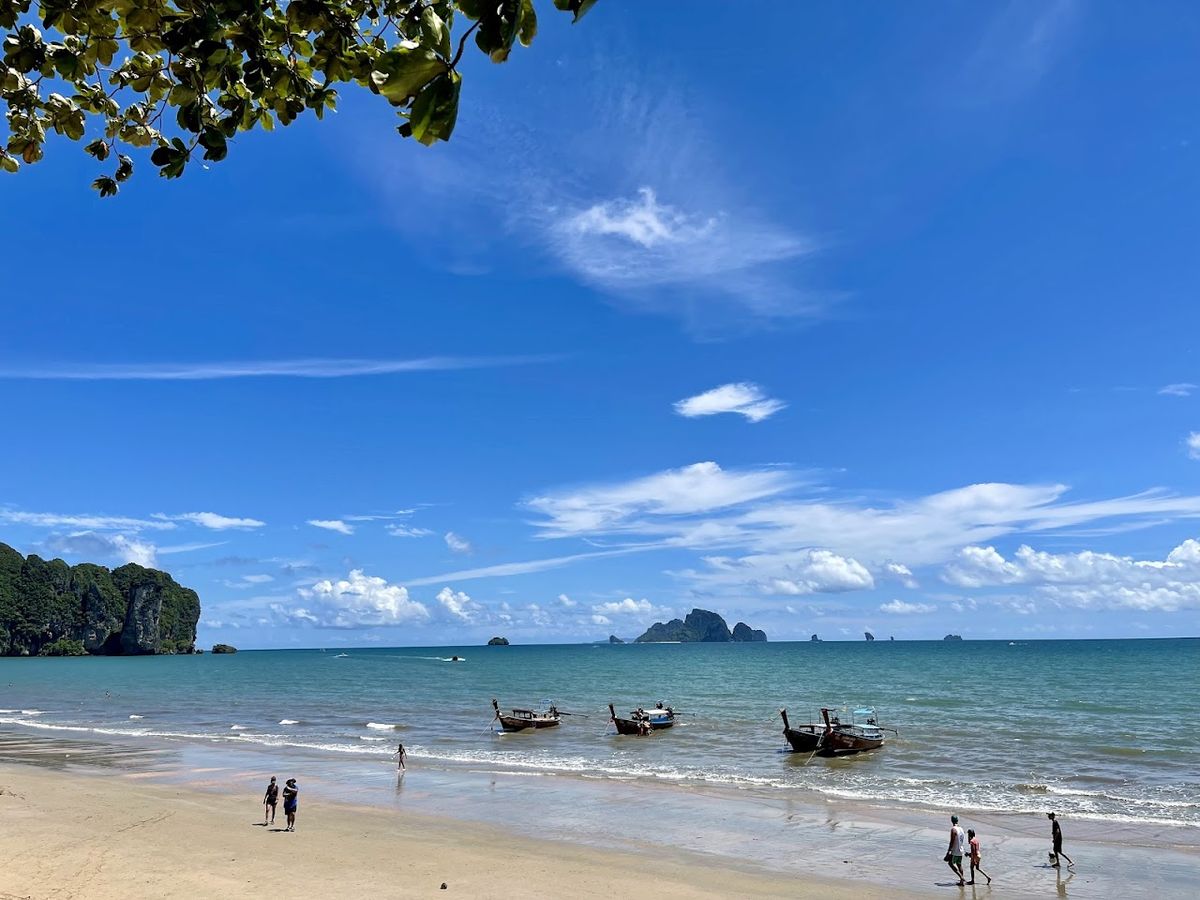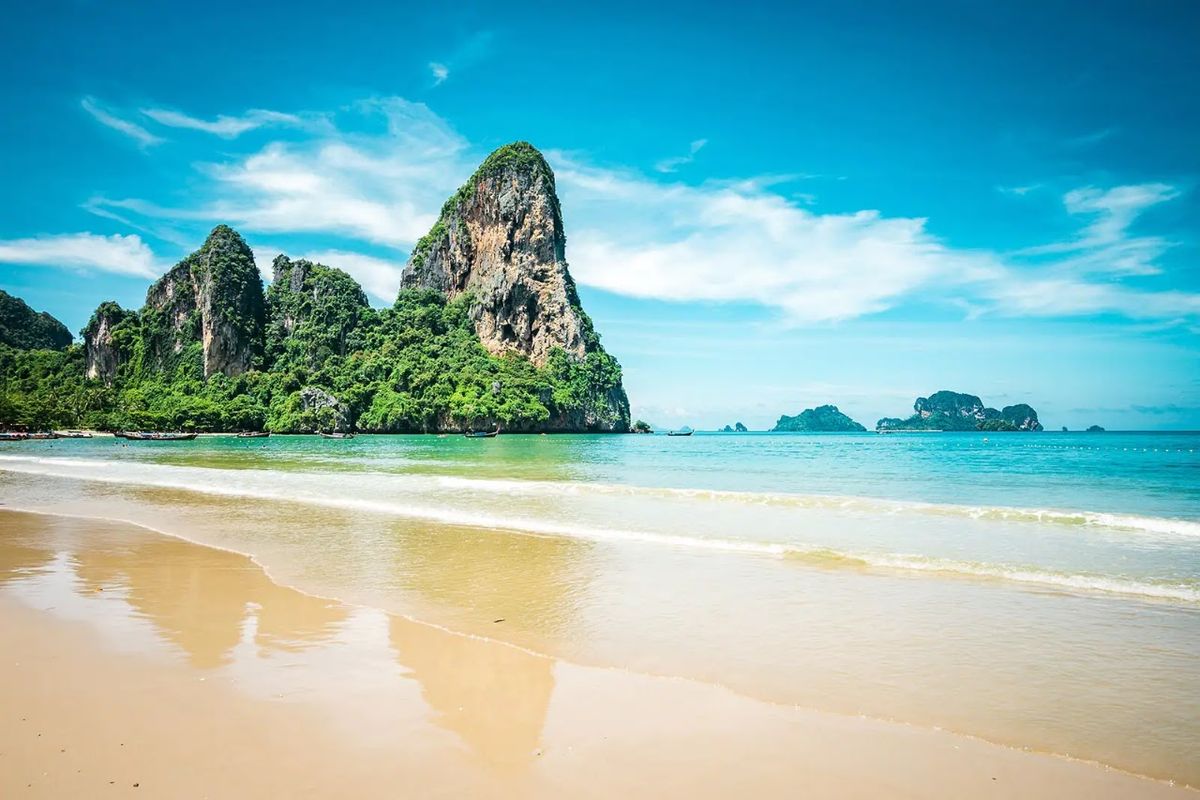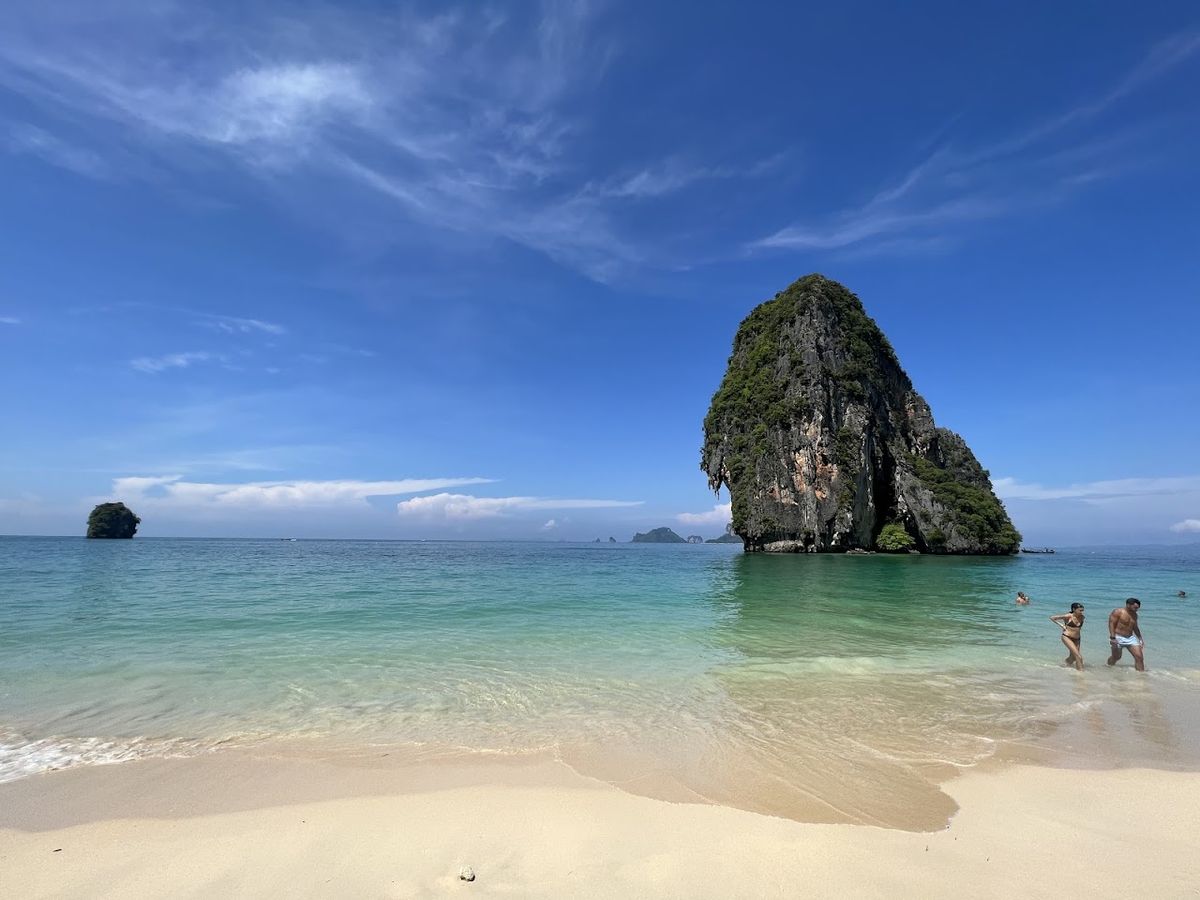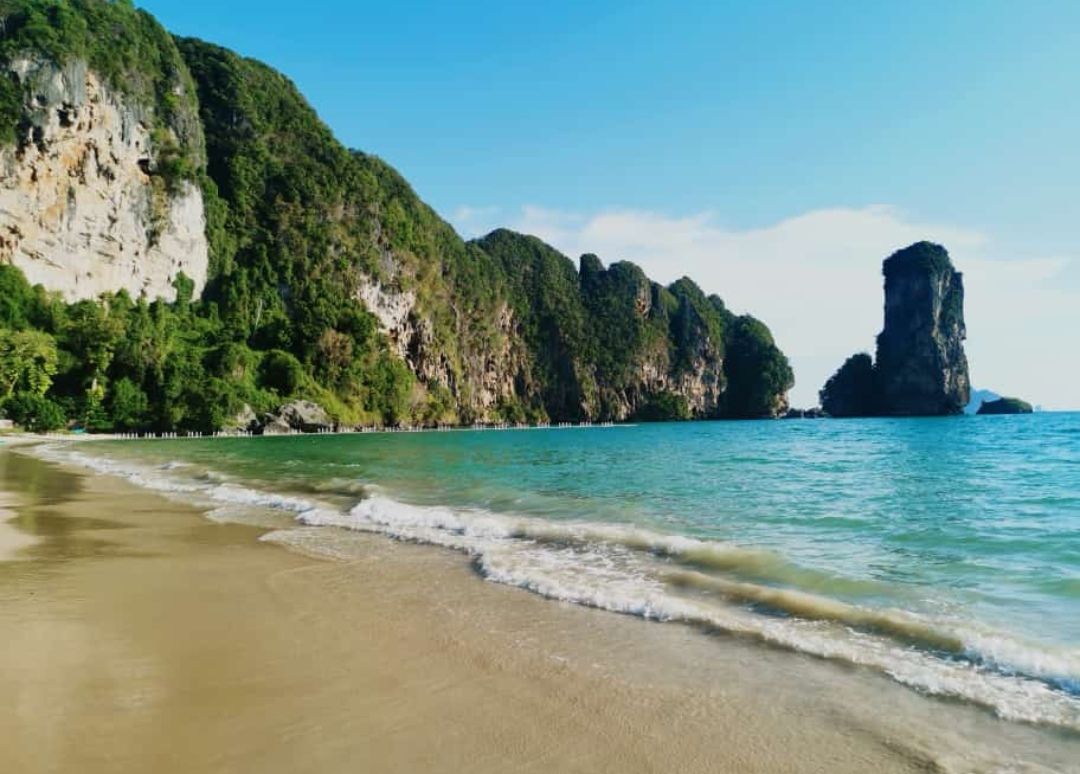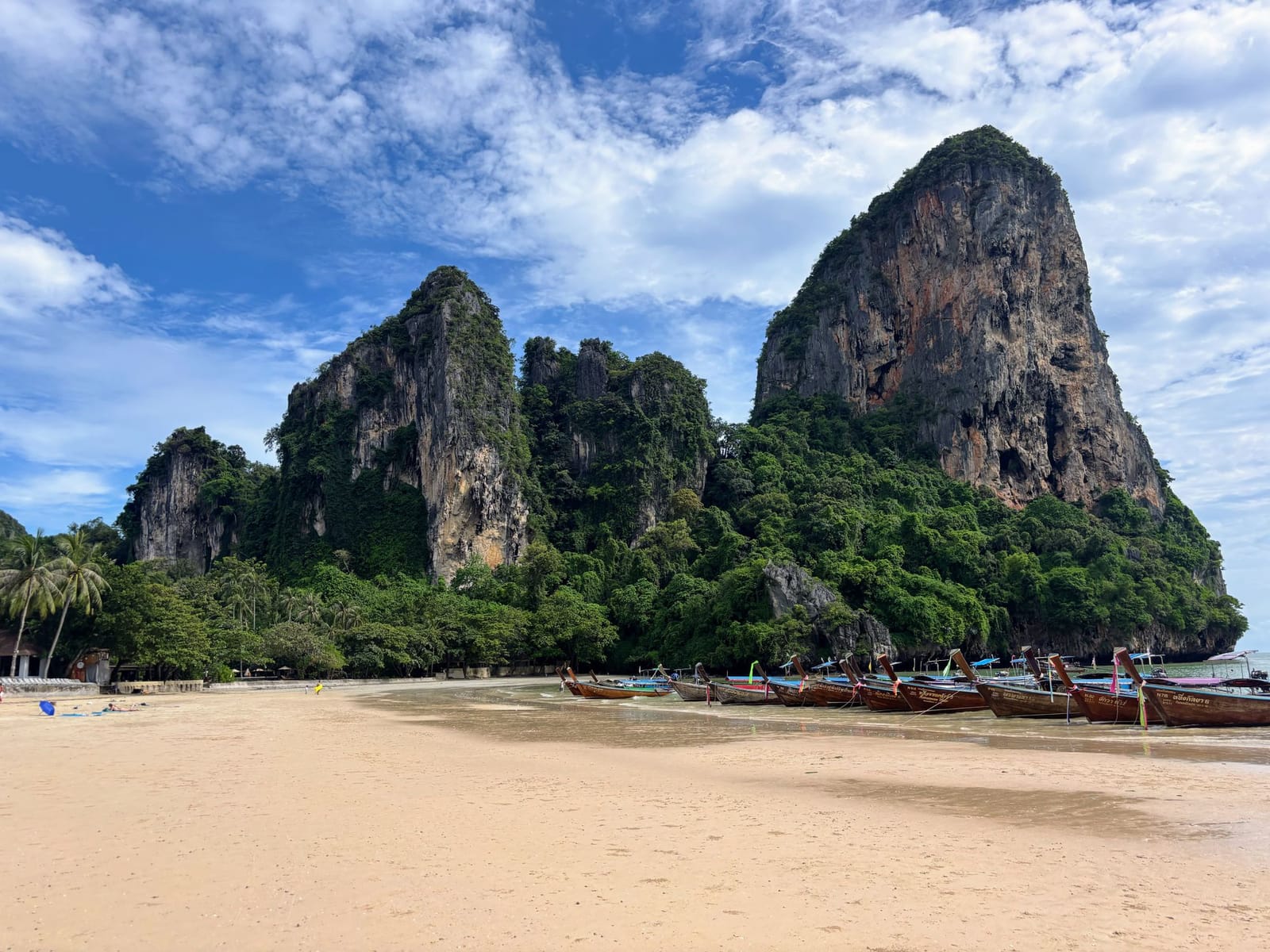
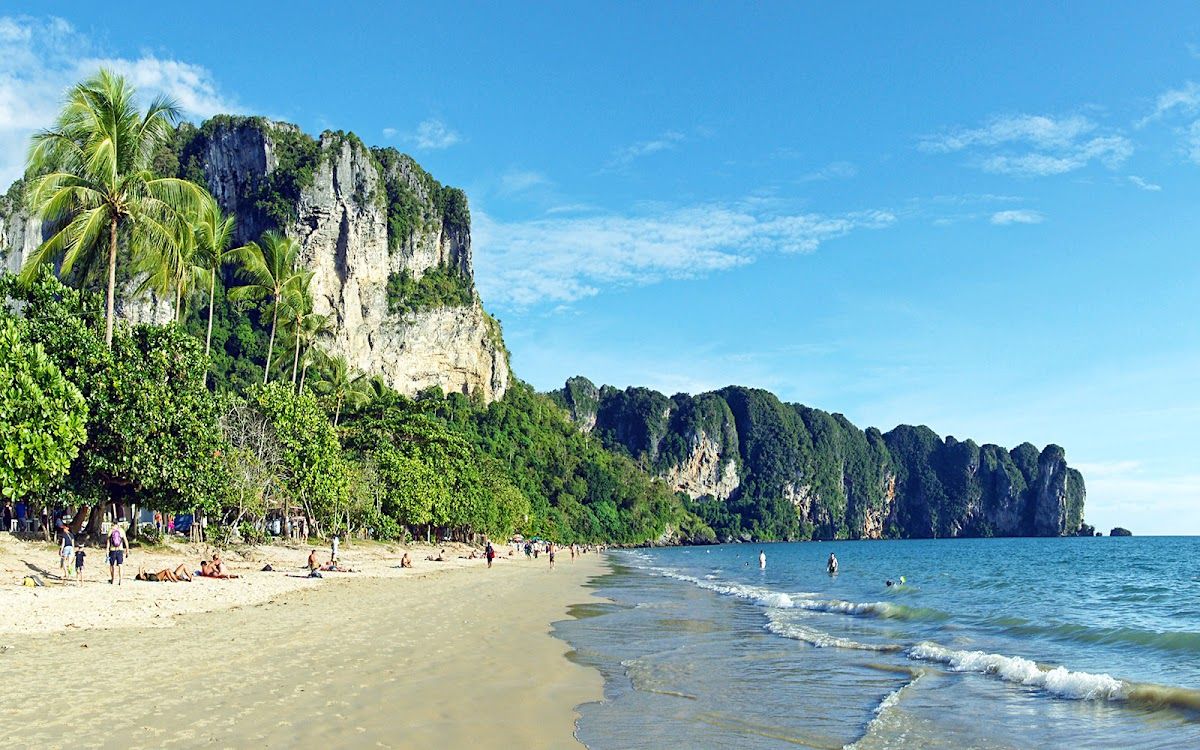
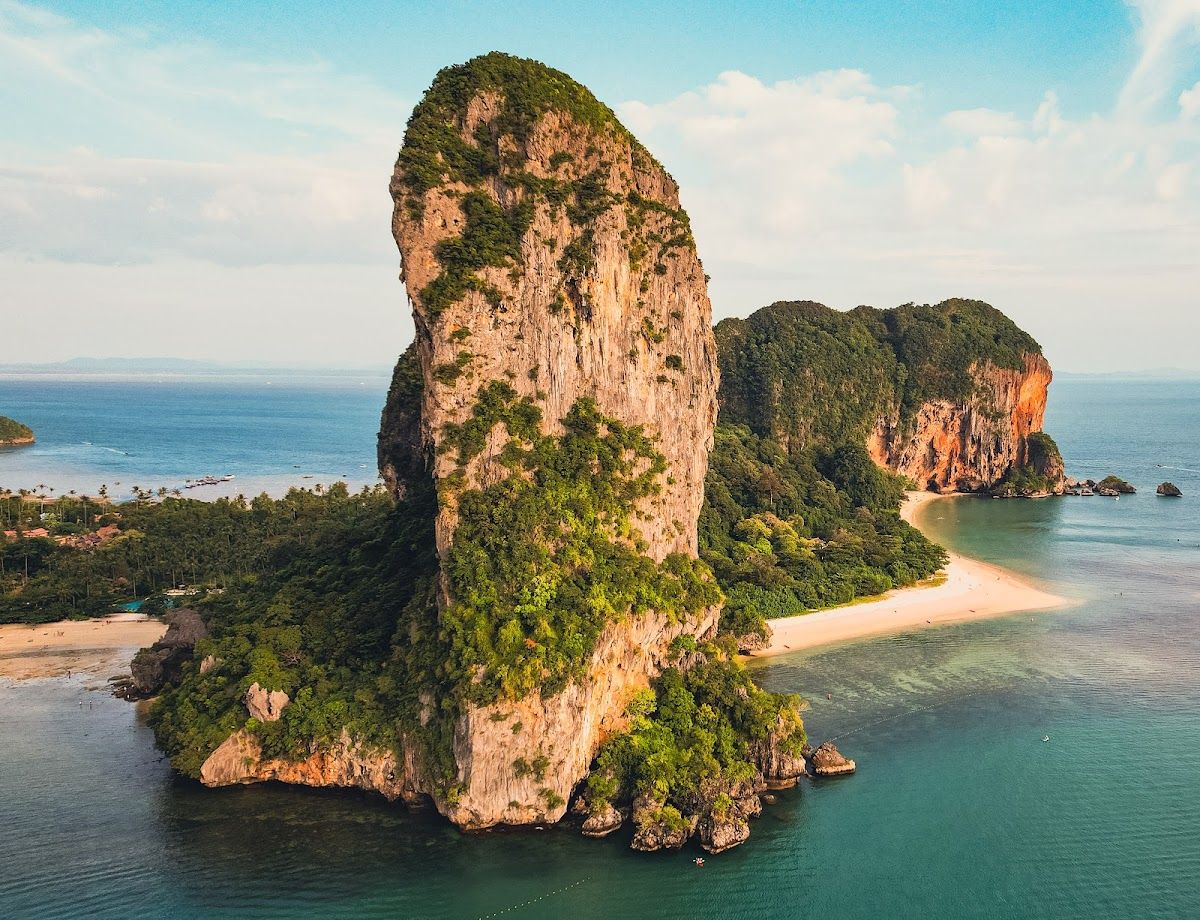
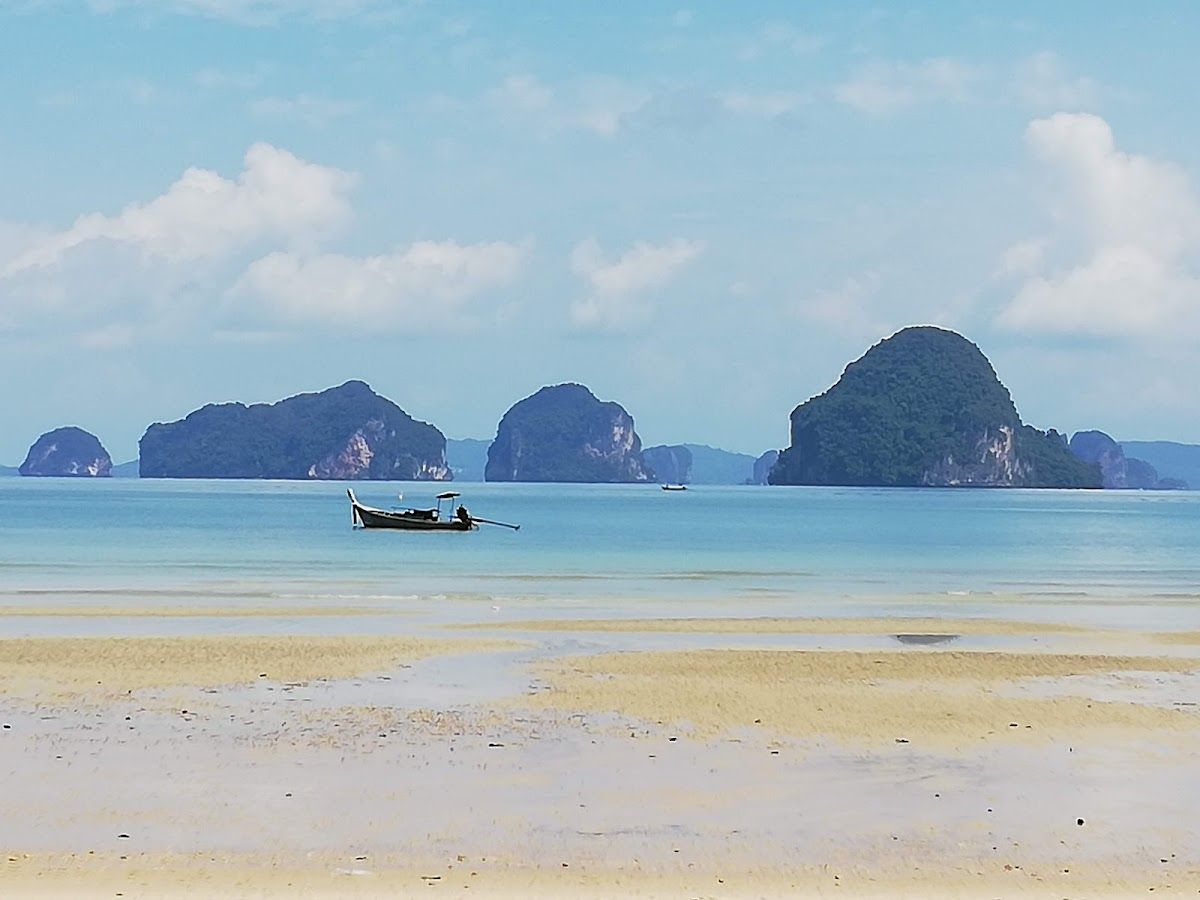
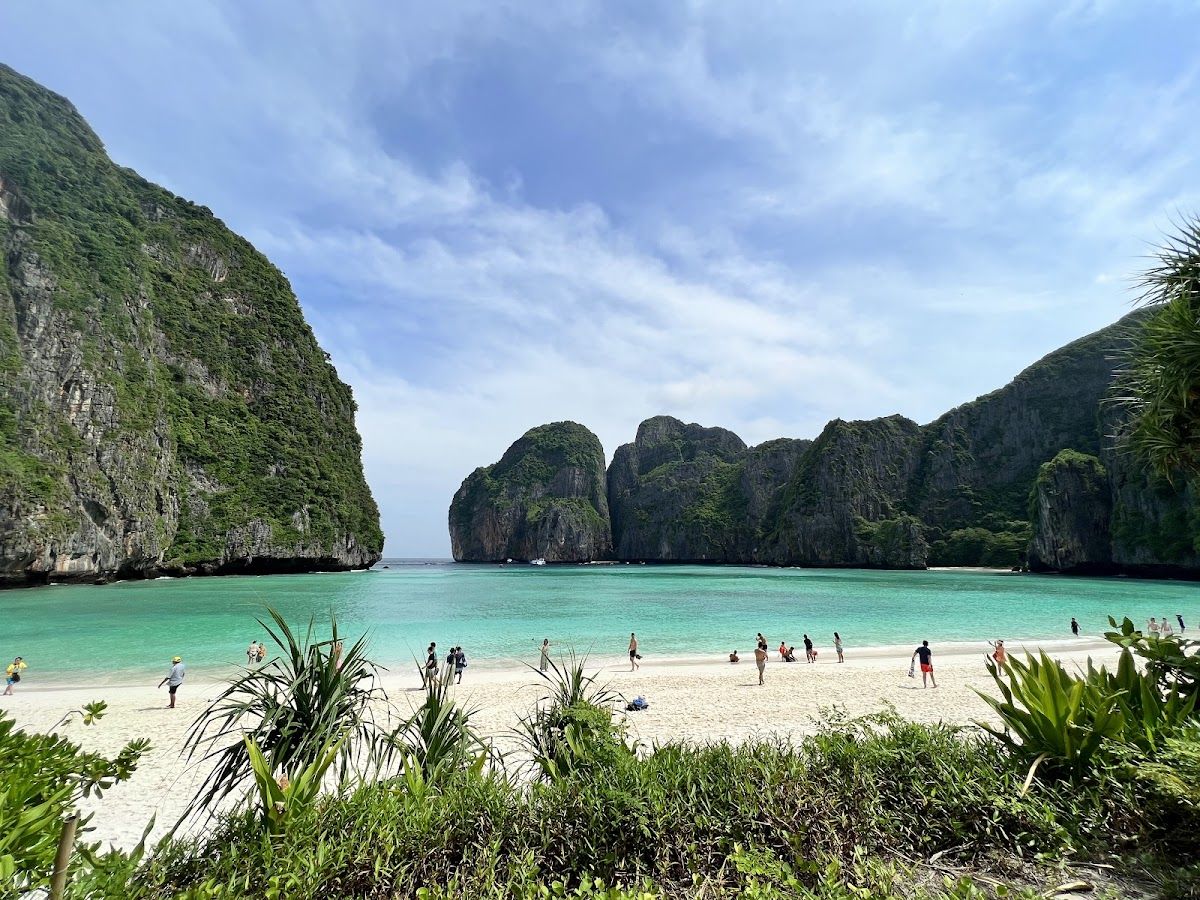
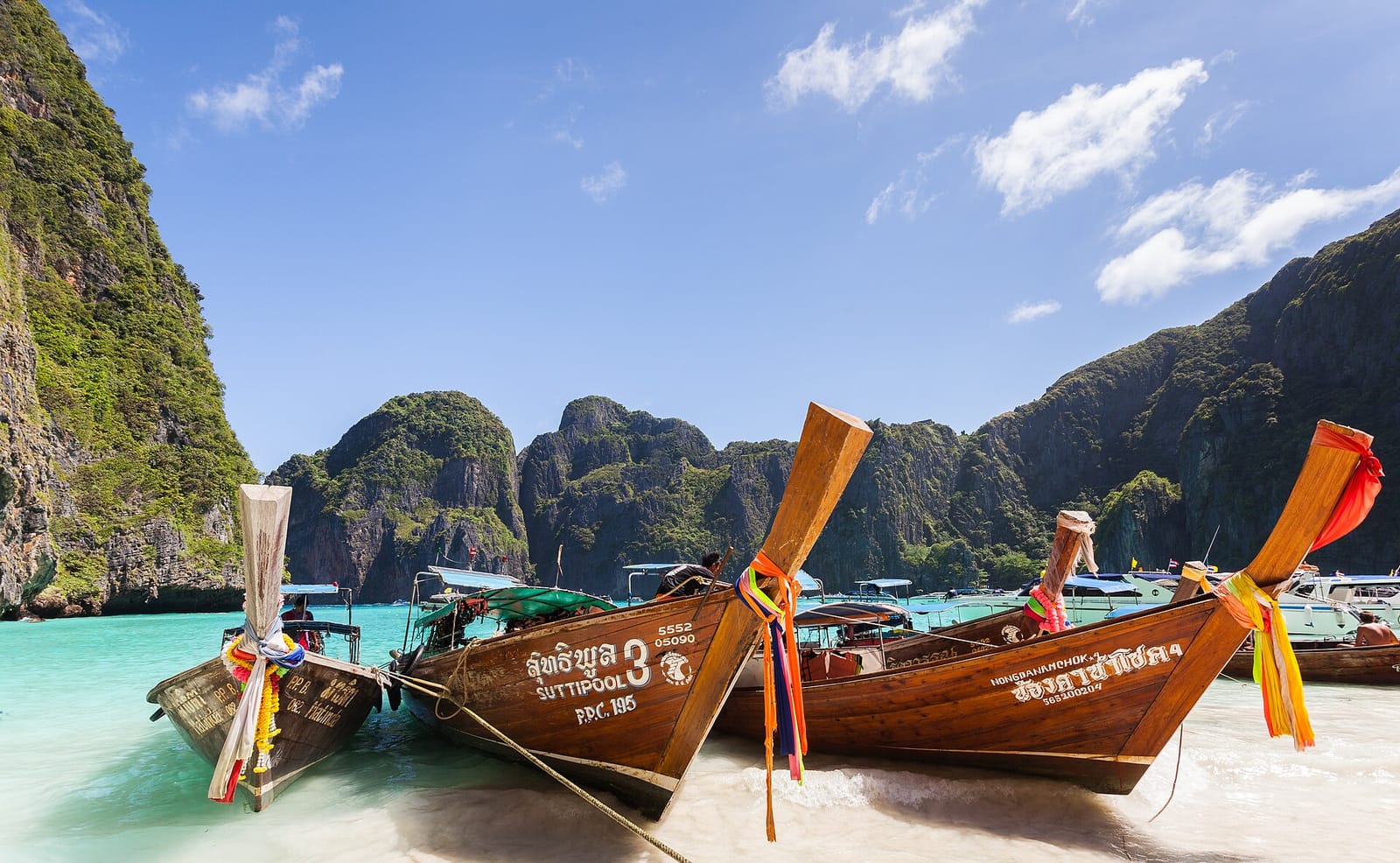

Phi Phi is the most famous scenery in the Andaman — the cliffs, Maya Bay, the water that glows an unreal green — and also the most crowded. A day trip from Krabi puts it within reach, but you should book it knowing what you’re getting: extraordinary landscapes shared with a lot of other boats. Here’s the honest version, so you can decide if it’s your day or not.
Quick facts
Reviewed 12 October 2026. The park fee is the Hat Noppharat Thara–Mu Ko Phi Phi foreign-visitor rate checked that day.
- Boat: about ฿1,700 adult, ฿1,500 child, from Krabi.
- Park fee: ฿400 adult, ฿200 child, cash at the pier, on top of the ticket.
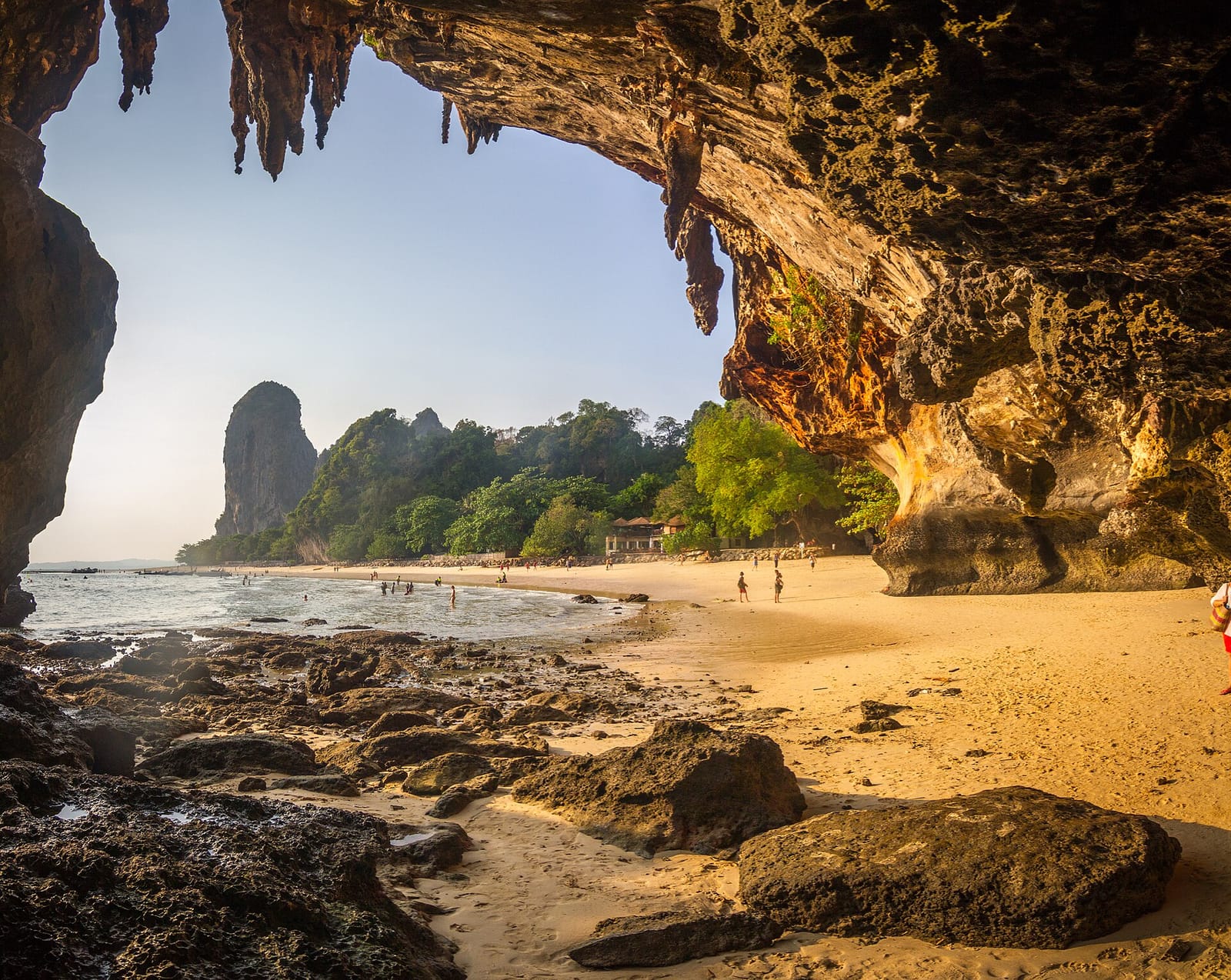
- Maya Bay: you land at a jetty and look from the beach. Swimming in the bay is not allowed. The photo at the top is from 2013, when boats still came onto the sand.
- Quieter alternative: the Hong Islands.
The short version
- Price: speedboat day trips from Krabi run about ฿1,700 (US$50) per adult, ฿1,500 child.
- On top: a ฿400 national park fee (฿200 child), paid at the pier in cash.
- Maya Bay: reopened, but you can no longer swim there — you view it from the beach.
- The crowds are real. It’s the busiest day trip in the region; manage them or skip Phi Phi for the quieter Hong Islands.
- Best defence: an early-bird departure that beats the main fleet. Book through activities.
What you actually see
A standard Phi Phi speedboat day covers the Phi Phi Leh loop and a stop or two on Phi Phi Don:
- Maya Bay — the beach from the film, a perfect curve of white sand under sheer cliffs. Since it reopened after its rest, swimming in the bay is banned; you land at a jetty on the far side, walk in, and view it from the sand. Still stunning, but it’s a look-not-swim stop now.
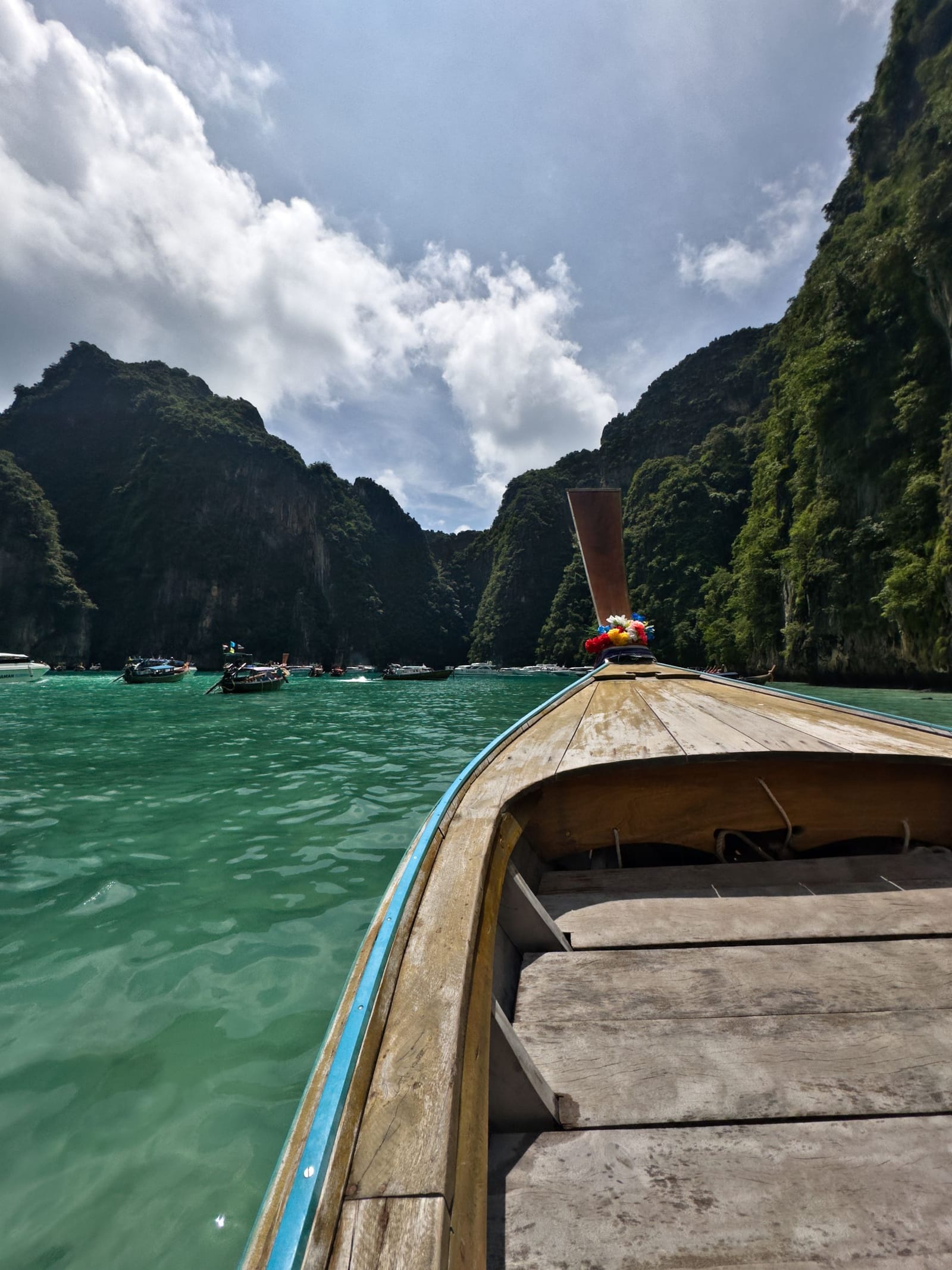
- Pileh Lagoon — a flooded canyon of still, jade-green water enclosed by cliffs. A highlight, and usually a swimming/snorkelling stop.
The crowds — the honest bit
There’s no way around it: Phi Phi is busy, and Maya Bay especially so. Boats from Krabi, Phuket and Phi Phi itself all converge on the same handful of spots at roughly the same times, so mid-morning at Maya Bay means queues down the jetty and a beach lined with people. The scenery is genuinely world-class; whether it’s worth sharing with that many others is the real question, and it comes down to your tolerance and your expectations.
If crowds ruin a place for you, be honest with yourself before booking. You may get more out of the quieter Hong Islands or a second Four Islands day, which have similar water and cliffs with a fraction of the people.
How to make the day better
- Take an early-bird tour. The single best move. Operators running the earliest departures reach Maya Bay and Pileh Lagoon before the main fleet — an hour that transforms the experience. Worth paying a little more for.
- Pick a well-run boat. Read recent reviews; a maintained boat and a good guide make a long day on the water far better. Cheapest isn’t the goal here.
- Manage seasickness. It’s a longer, faster crossing than the local island loops. If you’re prone, take something beforehand and sit toward the back-middle.
- Bring cash for the park fee and drinks, and a dry bag for phones — speedboats get wet.
- Set expectations. Come for the landscapes, not solitude, and you’ll enjoy it. Come expecting an empty beach and you’ll be let down.
What it costs, all in
- Speedboat day trip: about ฿1,700 (US$50) adult, ฿1,500 child. Catamaran and premium options cost more.
- National park fee: ฿400 adult, ฿200 child, cash at the pier.
- Usually included: lunch on Phi Phi Don, snorkel gear, life jacket, water, hotel pickup from Ao Nang.
Realistic all-in is around ฿2,100+ (US$62+) per adult once the fee is in.
Getting there and how long it takes
Phi Phi sits about 40km southwest of Krabi, out in open water. By speedboat the crossing is roughly 45 minutes to an hour each way, depending on the sea and your pickup point; the day runs long, with hotel pickup around 8am and drop-off in the late afternoon. Tours collect from Ao Nang and the nearby beaches, so you don’t arrange your own transport — it’s built into the price. If you’re staying up at Klong Muang or Tubkaek, expect an earlier pickup for the extra distance.
If you’d rather not do the whole thing as a rush, you can also reach Phi Phi by scheduled ferry from Krabi and stay overnight (below), or join a slower catamaran or big-boat tour that trades some speed for comfort and stability.
The overnight alternative
If Phi Phi really appeals, consider staying a night instead of day-tripping. Phi Phi Don, the main inhabited island, has accommodation from hostels to resorts, and staying over means you see the islands in the early morning and late afternoon — before and after the day fleet arrives from Krabi and Phuket. That’s when Maya Bay, Pileh Lagoon and the viewpoints are at their quietest and best. The trade-off is that Phi Phi Don’s small town gets loud and party-ish at night, so pick your area to match your taste. For a first trip focused on Krabi’s mainland and islands, a day trip is enough; for island-hoppers, an overnight is the better way to actually enjoy Phi Phi.
What to pack
It’s a long, wet, sun-exposed day, so come prepared: reef-safe sunscreen and a hat, a dry bag for your phone and valuables, a towel, sandals, and a light layer for the fast crossing. Bring cash in small notes for the park fee and drinks, and something for seasickness if you’re prone — the open-water run is bumpier than the local island loops. A rash vest saves you reapplying sunscreen through hours of snorkelling.
When to go — and when not to
Phi Phi is at its best in the dry season, November to March, when the sea is calm and the water clearest. In deep monsoon the crossing gets rough and trips are cancelled, so keep a spare day if you come in green season. Whenever you go, the earlier your departure, the better your day.
Worth it if you’ve seen Krabi’s other islands?
If you’ve already done the Four Islands and Hong Islands, you might wonder whether Phi Phi adds anything. It does, in scale — the cliffs are taller, Maya Bay and Pileh Lagoon are genuinely more dramatic than anything closer to Krabi, and it’s a bucket-list name for a reason. What it adds in grandeur it gives back in crowds and a longer, rougher crossing. So the honest test is what you value: if you want the most spectacular scenery and will book early to soften the crowds, go. If you were happiest with the quieter, closer islands and their space, you’ve arguably already had the better day, and your money and energy might go further on a second local trip or a slow beach day.
The verdict
Do Phi Phi if the scenery is on your must-see list and you can book an early boat and accept the crowds — done right, it delivers some of the most jaw-dropping landscapes in Thailand. Skip it if crowds spoil places for you; the quieter island days out of Krabi will make you happier for less money.
Whichever way you lean, base in Ao Nang for the easiest pickups, sort your room on the hotels list, book an early-bird boat through activities, and slot the day into the 3-day itinerary.
FAQ
How much is a Phi Phi day trip from Krabi?
About ฿1,700 for an adult speedboat seat and ฿1,500 for a child, plus the ฿400 foreign adult park fee (฿200 child) in cash at the pier. Lunch on Phi Phi Don and snorkel gear are usually in the boat price. A realistic all-in figure is around ฿2,100.
Can you swim at Maya Bay?
No. Since Maya Bay reopened you walk in from a jetty on the far side and look at the beach from the sand. Swimming in the bay is banned. Pileh Lagoon is the usual swim on the same loop.
Is Phi Phi worth it if you have already done the Four Islands?
The cliffs are taller and Maya Bay and Pileh are more dramatic than the islands closer to Ao Nang. You also get more boats and a longer, rougher crossing. If crowds spoil a day, the Hong Islands are the better second trip.